


In This Article
Picking the right universal joint (U-joint) is the secret to keeping your drivetrain running smooth and avoiding those middle-of-the-road breakdowns. Think of this as your easy-to-read, professional handbook. We’ve combined some real-world stories with pro tips on maintenance and selection to help you—whether you’re a DIY enthusiast or a fleet pro—get the perfect match for your ride.
If you’re hearing a metallic “clank” when you shift gears or feeling a weird vibration through the seat, your U-joints are likely waving a red flag. But what do they actually do? When should you pull the trigger on a replacement? Let’s dive into the most common questions to get you back on the road with confidence.
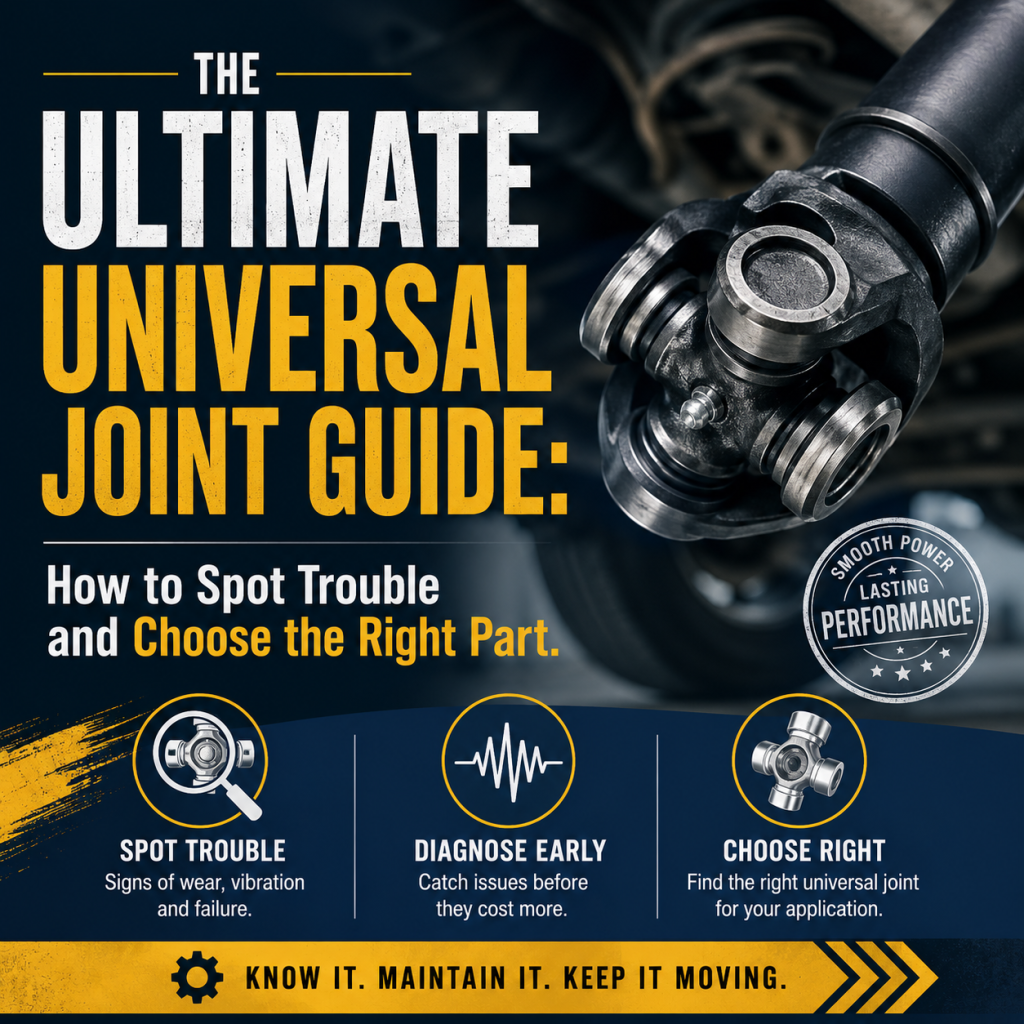
1. What exactly does a U-joint do in a car?
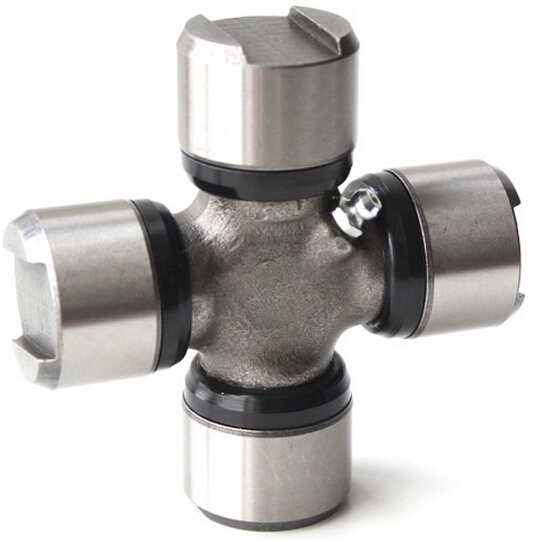
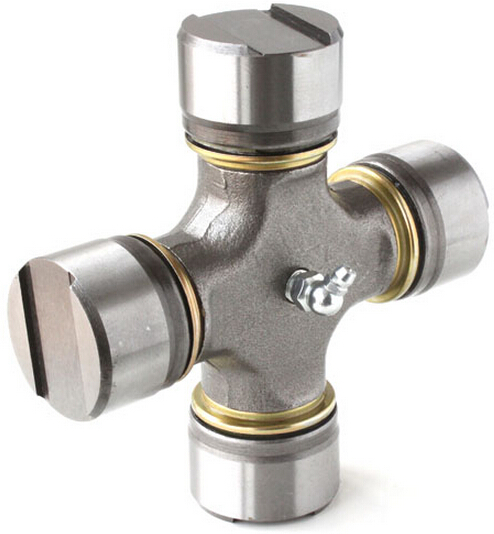
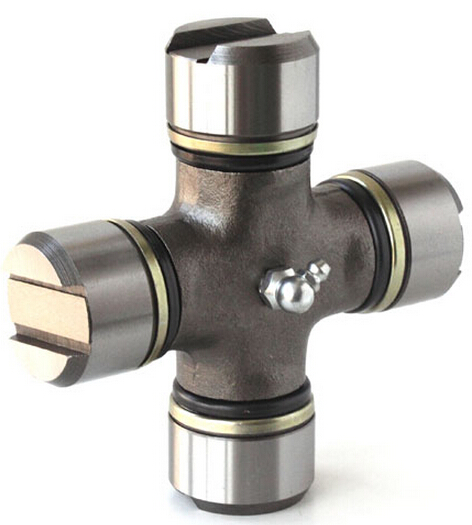
The U-joint is a vital “flexible link” in your drivetrain. Its job is to let the drive shaft bend and flex while it sends power from the transmission to the differential. Since your transmission and axles aren’t perfectly lined up—and the transmission moves slightly on its mounts while the rear axle can bounce several inches on the suspension—the U-joint compensates for those changing angles. Without them, your drive shaft would be too rigid and would snap under the pressure of a single pothole.
You’ll find these little heroes in:
- Rear-wheel drive (RWD) and 4WD trucks and SUVs.
- Certain All-Wheel Drive (AWD) models.
- Heavy-duty commercial vehicles with multi-section drive shafts.
Real-World Lesson: Take a heavy-duty semi-truck hauling freight across the bumpy interstates of the American Midwest. With a rear axle that’s constantly jumping around, the original U-joints are built for high-angle flexibility. A similar truck in the same fleet swapped in some “bargain-bin” joints that couldn’t handle the dynamic angles. Three months later? The drive shaft was crooked and the truck was shuddering. The lesson is simple: U-joints aren’t just parts; they’re the “flex” your chassis needs to survive the road.
2. What are the warning signs of a failing U-joint?
Parts wear out—it’s just a fact of life. Here is a quick-reference table of the symptoms you shouldn’t ignore:
| Symptom | What It Usually Means |
| Metallic Clunk | Frequent when shifting from Drive to Reverse; suggests the joint has too much “play.” |
| High-Speed Vibration | The drive shaft is out of balance because the U-joint is worn or “frozen.” |
| Chirping or Squeaking | The internal grease has dried up, and metal is grinding on metal at low speeds. |
| Visible Rust or Leaks | The seals have failed, letting grease out and road grime in. |
| Physical Movement | If you can grab the shaft and wiggle it by hand, the joint is toast. |
The Aussie Outback Example: An off-road enthusiast in Australia was taking his SUV through some sandy, gritty terrain. He started hearing a high-pitched squeak at low speeds and felt a tiny “clunk” when shifting. He thought it was his suspension acting up, but a quick inspection showed a cracked U-joint boot and zero grease inside. Swapping for a high-quality joint fixed the noise and saved his axle. The takeaway? Squeaks and clunks are your car’s way of asking for help.
3. How long do these things actually last?
In a perfect world, a U-joint could last the entire life of the vehicle. But “perfect” doesn’t include mud, heavy trailers, or high-speed highway hauls.
- Driving Conditions: Heavy towing and off-roading kill U-joints faster.
- Maintenance: Most U-joints need a fresh shot of grease every 5,000 miles or during every oil change. Some modern ones are “sealed for life,” meaning you just replace them when they wear out.
- Vehicle Type: Trucks and work vans put way more stress on these parts than a sedan.
4. Can I keep driving with a bad U-joint?
Technically? Yes, for a very short distance. Should you? Absolutely not. A worn joint creates vibrations that can destroy your transmission’s output shaft seals and the differential. If the joint fails completely while you’re moving, the drive shaft can drop and hit the pavement, which is as scary and expensive as it sounds.
5. Should I replace them all at once?
If you have a drive shaft with two or three joints, and one goes bad, the others aren’t far behind. They’ve all traveled the same miles and hit the same bumps.
- Smoother Ride: Replacing the set eliminates all hidden vibrations.
- Saves Money: You only have to take the drive shaft out once, saving you (or your mechanic) a lot of repeat labor.
- Peace of Mind: You won’t be back in the shop a month later for the “other” joint.
6. What happens if I just wait?
Delaying this repair is a gamble where the house always wins.
- Drive Shaft Drop: The joint snaps, and your drive shaft falls off.
- Collateral Damage: The shaking destroys your expensive transmission or differential.
- Loss of Control: A drive shaft failure at 70 mph can cause a major accident.
A city delivery driver in Spain noticed his van vibrating at highway speeds but kept pushing it to finish his routes. While on a fast bypass road, the joint finally snapped. The drive shaft dropped, whipped around, and smashed into the pavement. The $85 U-joint he ignored ended up causing $620 in damages to the shaft and differential. Pro Tip: Fix the small noise before it becomes a giant bill.
7. What’s the price range?
U-joints are actually pretty affordable. You’re usually looking at $15 to $50 for the part itself, depending on the brand and material. While “budget” options exist, high-quality, name-brand joints are worth the extra ten bucks for the added durability, especially for trucks and towing.
8. Can I DIY this?
If you’re handy with a wrench and have some basic tools, you can definitely tackle this. You’ll need:
- A hydraulic press (or a specialized U-joint removal tool).
- A good socket set.
- A floor jack and jack stands.Warning: Precision matters here. If you seat the needle bearings wrong or get the alignment off, you’ll have a vibration that’s worse than the one you started with. If you’re not confident, let a pro handle the press work.
9. How do I pick a reliable supplier?
Don’t settle for “no-name” parts with no history. You want a manufacturer with a track record for quality and precision.
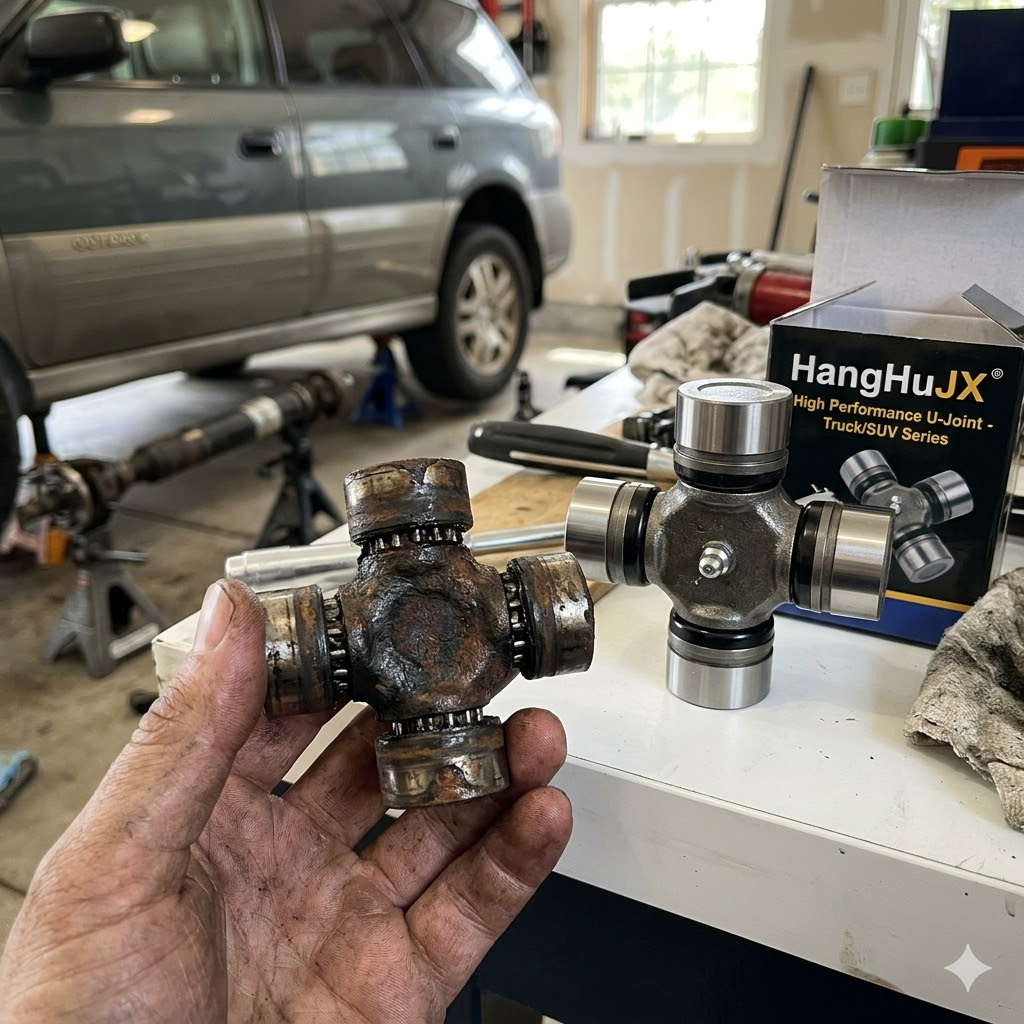
About HangHuJX:
We aren’t just a shop; we’re a dedicated manufacturer of industrial power transmission equipment. We specialize in SWC, SWP, and SWL type cross-axis universal joints, along with drive shafts for everything from cars and farm equipment to heavy engineering machinery. Our team has decades of experience in the game. We live by the ISO9001 quality system, ensuring that every part that leaves our floor is built to last. For us, “good enough” isn’t an option—we’re all about continuous improvement to keep your wheels turning.
Still hearing that clunk? Or maybe you need a bulk order for a fleet? Reach out to our technical team today for a professional consult and get the high-quality parts your vehicle deserves.
Universal Joint FAQ
Q: My car vibrates only at 55-65 mph. Is that a U-joint?
A: It’s a very likely candidate. Often, a “frozen” joint won’t make noise but will cause a harmonic vibration that only shows up at specific speeds.
Q: Do all U-joints have grease fittings?
A: No. Many “OEM” or “Maintenance-Free” joints are sealed. They last a long time but can’t be serviced. If your joint has a small nipple (a Zerk fitting), hit it with a grease gun every oil change!
Q: How do I know which size to buy? A: You’ll need to know your vehicle’s year, make, and model, and sometimes the “series” of the drive shaft (like 1310 or 1350). Checking your VIN or talking to a specialist at HangHuJX is the safest bet!