


If you’re sourcing a universal joint for industrial equipment, one mistake can cost you downtime, maintenance headaches, or even equipment failure.
And here’s the challenge:
There isn’t just one type of universal joint. There are multiple designs, each engineered for specific torque loads, alignment conditions, and industries.
In this guide, I’ll walk you through the most common universal joint types, how they actually work, and how to choose the right one based on real-world applications.
This is written for engineers, importers, and distributors who need clear answers, not textbook theory.
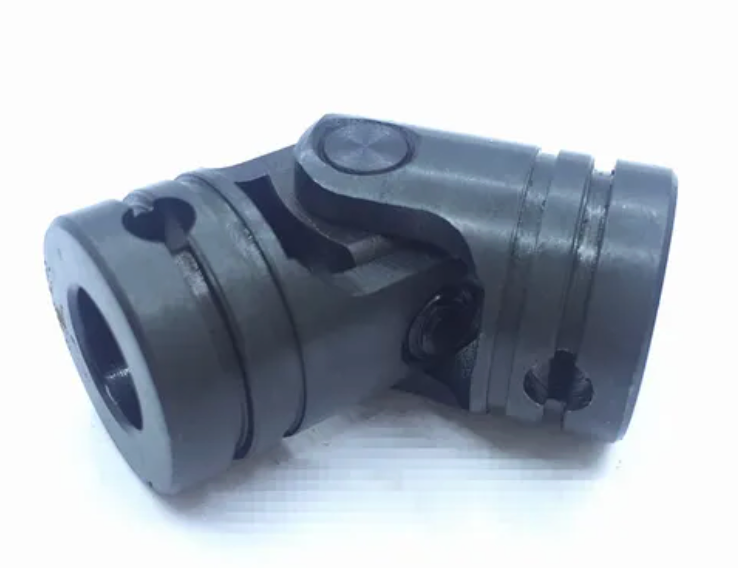
1. Cardan Joint (Hooke’s Joint)
Working Principle
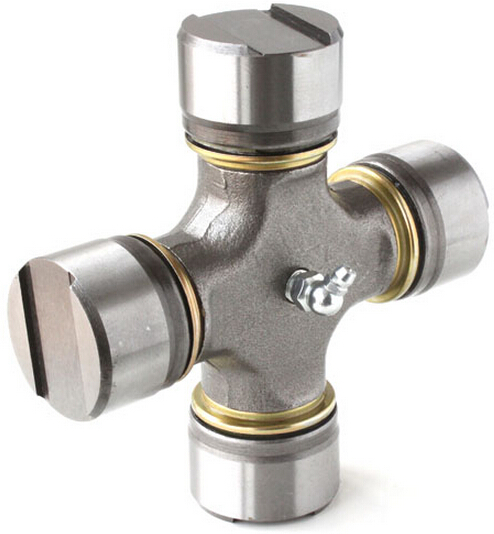
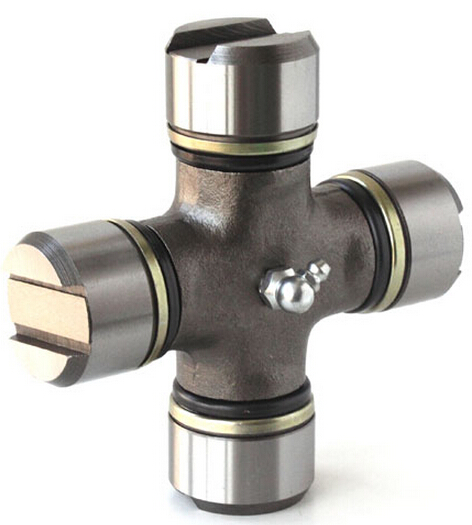
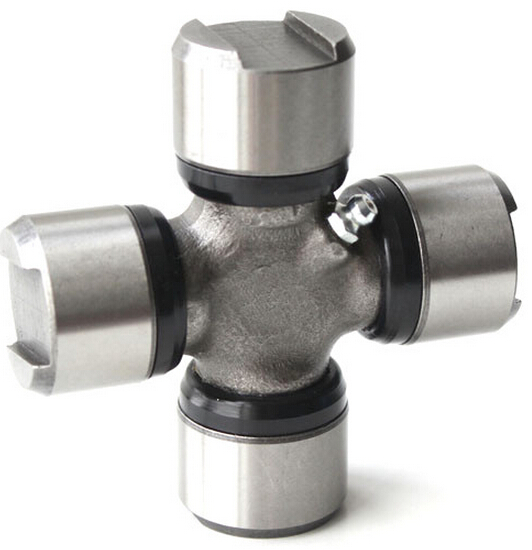
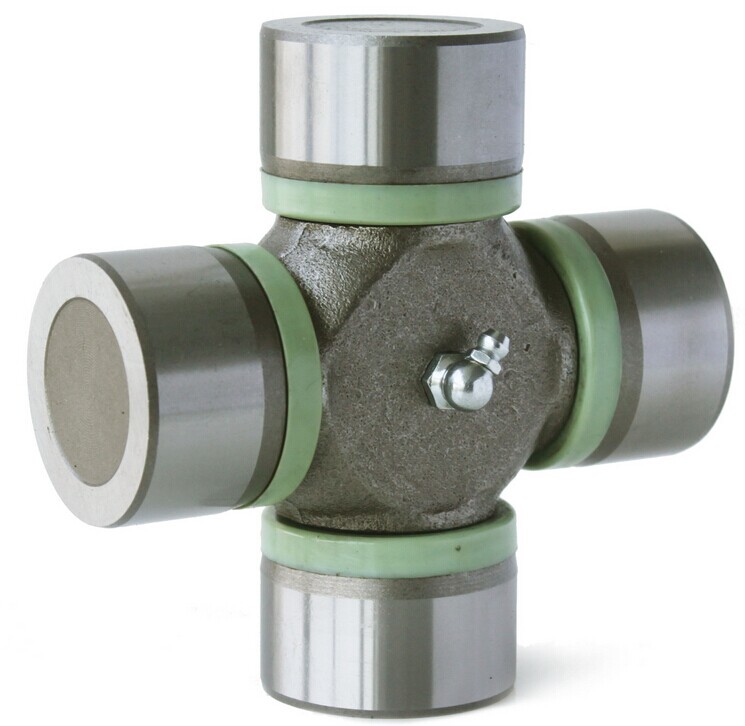
The Cardan joint is the foundation of most universal joint designs. It uses a cross-shaped component (cross or spider) to connect two shafts at an angle.
As torque is transmitted, the joint allows angular misalignment. However, it does not maintain constant velocity, meaning the output speed fluctuates slightly during rotation.
Advantages
- Simple and highly reliable structure
- Cost-effective for large-scale production
- Handles moderate to high torque loads
- Widely standardized across industries
Disadvantages
- Causes velocity fluctuation at higher angles
- Generates vibration if not properly aligned
- Not ideal for high-speed precision systems
Applications
- Industrial drive shafts
- Steel and rolling mills
Most industrial models like SWC, SWP, SWL, and SWZ universal joints are based on this design, making it the most commercially important type.
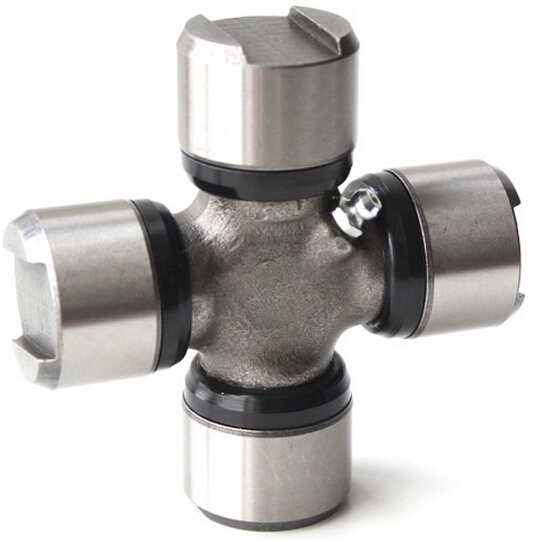
2. Double Cardan Joint
Working Principle
A double Cardan joint combines two Cardan joints with a centering mechanism. This configuration cancels out velocity fluctuations.
The result is a smoother, more stable rotational output.
Advantages
- Eliminates speed variation
- Better performance at larger angles
- Reduces vibration and wear
Disadvantages
- More complex structure
- Higher cost than standard joints
- Requires precise installation
Applications
- High-speed industrial systems
- Precision machinery
- Advanced drive shaft assemblies
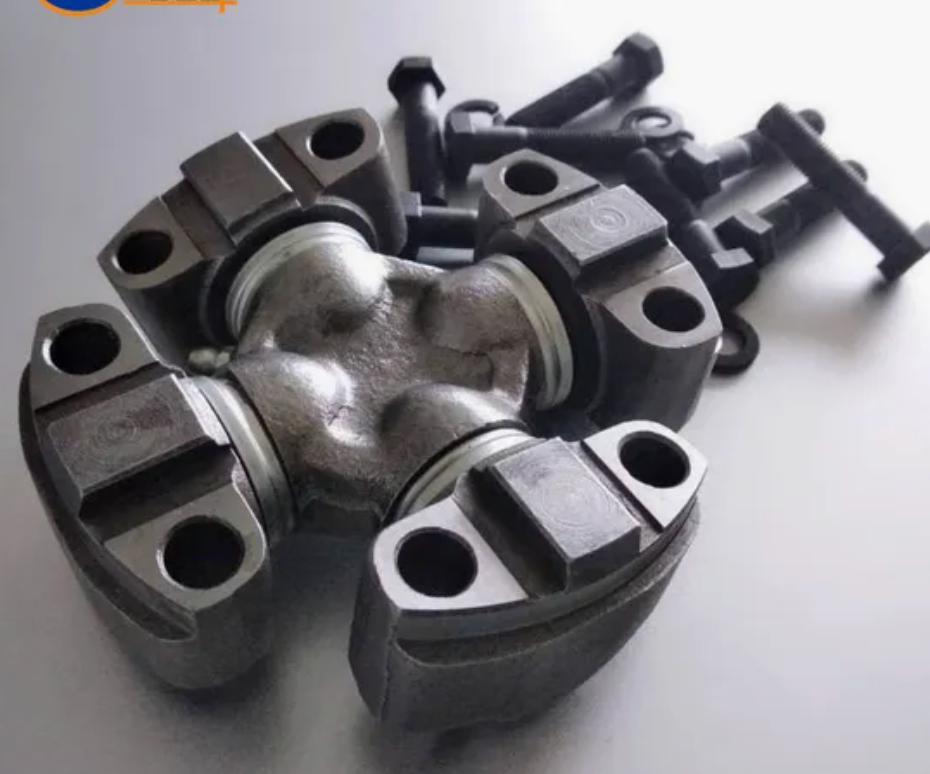
3. Constant Velocity (CV) Joint
Working Principle
Unlike Cardan joints, a CV joint maintains constant rotational speed regardless of the angle between shafts.
It uses ball bearings or rollers inside a housing to ensure smooth power transmission.
Advantages
- No speed fluctuation
- Extremely smooth operation
- Ideal for high-speed applications
Disadvantages
- Higher manufacturing cost
- More sensitive to contamination
- Requires better sealing and lubrication
Applications
- Automotive drivetrains (especially FWD vehicles)
- High-performance mechanical systems
- Precision equipment
4. Flexible Rubber Coupling (Rag Joint)
Working Principle
This type replaces rigid metal components with a flexible rubber disc that connects two shafts.
It absorbs vibration and compensates for slight misalignment.
Advantages
- Excellent vibration damping
- Reduces noise
- Low maintenance
Disadvantages
- Limited torque capacity
- Shorter lifespan under heavy load
- Not suitable for harsh industrial environments
Applications
- Steering systems
- Light-duty mechanical connections
- Equipment requiring noise reduction
5. Telescopic Drive Shaft with Universal Joint
Working Principle
This system combines a universal joint with a splined shaft, allowing both angular movement and axial length adjustment.
It is commonly used where shaft length changes during operation.
Advantages
- Handles both misalignment and length variation
- Increases system flexibility
- Essential for mobile equipment
Disadvantages
- More components = higher maintenance
- Requires proper lubrication of splines
- Slightly higher cost
Applications
- Heavy trucks
- Construction equipment
- Industrial transmission systems
6. Industrial Universal Joint Models (SWC, SWP, SWL, SWZ)
While the above classifications focus on design principles, buyers typically select universal joints based on industrial models.
Here’s how they compare:
- SWC Universal Joint
Heavy-duty, designed for high torque environments like steel mills - SWP Universal Joint
Flange connection type, ideal for stable and secure installations - SWL Universal Joint
Light-duty, compact, and cost-effective for smaller equipment - SWZ Universal Joint
Medium-duty, balancing performance and cost
If you’re sourcing in bulk, always match the model to your torque requirement and installation method, not just price.
7. How to Choose the Right Universal Joint
Here’s a simple framework used by experienced buyers:
Step 1: Define Load Conditions
- High torque → SWC
- Medium load → SWZ
- Light duty → SWL
Step 2: Check Connection Type
- Flange → SWP
- Shaft → Standard joints
Step 3: Evaluate Motion Requirements
- Angular only → Cardan joint
- Smooth constant speed → CV joint
- Length change → Telescopic shaft
Step 4: Consider Environment
- Dust / heavy load → industrial heavy-duty
- High precision → CV or double Cardan
FAQ: Universal Joint Buying Questions
1. What is the most commonly used universal joint?
The Cardan joint is the most widely used due to its simple structure and cost efficiency.
2. When should I use a CV joint instead of a Cardan joint?
Use a CV joint when you need constant speed and minimal vibration, especially in high-speed applications.
3. What’s the difference between SWC and SWP universal joints?
SWC is designed for heavy torque, while SWP focuses on flange connections and installation stability.
4. How do I choose the right universal joint size?
You need to consider torque, shaft diameter, operating angle, and speed. Incorrect sizing can lead to early failure.
5. Are universal joints customizable?
Yes. Most manufacturers offer OEM/ODM services based on drawings or application requirements.