


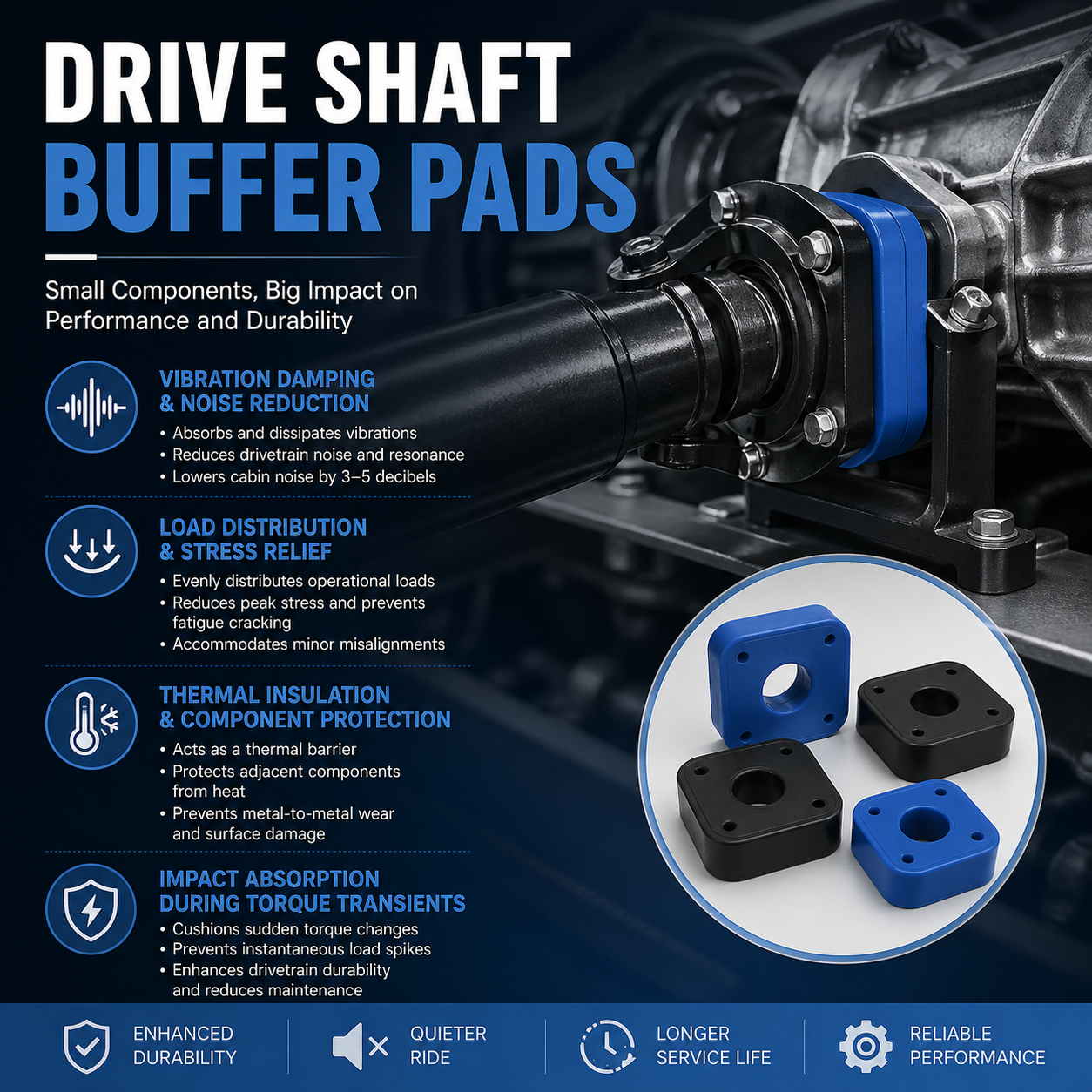
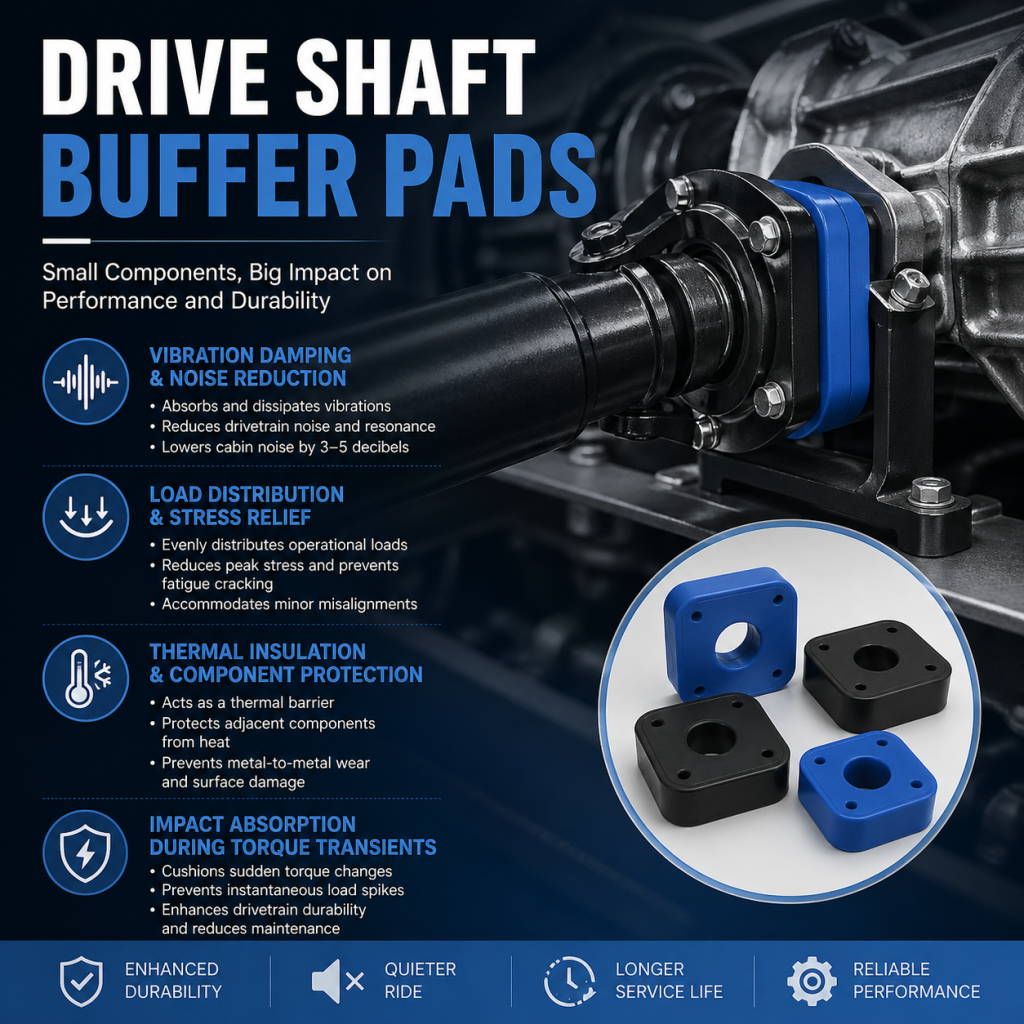
Drive shaft buffer pads are small yet essential components in modern automotive systems. They play a crucial role in vibration damping, load distribution, thermal insulation, and impact absorption, ensuring smoother, quieter, and more durable drivetrain operation.
1. Vibration Damping and Noise Reduction
Drive shafts generate mechanical vibrations during rotation, especially at high speeds above 3,000 RPM. These vibrations can propagate through the drivetrain, causing noise in the vehicle cabin or stress on transmission and differential components.
Buffer pads, typically made of polyurethane or rubber, absorb and dissipate this vibrational energy through their viscoelastic properties. When the material deforms under repeated loading, energy is released as heat rather than transmitted as noise—a process known as hysteresis loss.
Properly installed buffer pads can significantly reduce cabin noise, with technical studies showing a drop of 3–5 decibels under normal driving conditions. They help mitigate common complaints like drivetrain whine or gear rattle at specific engine speeds.
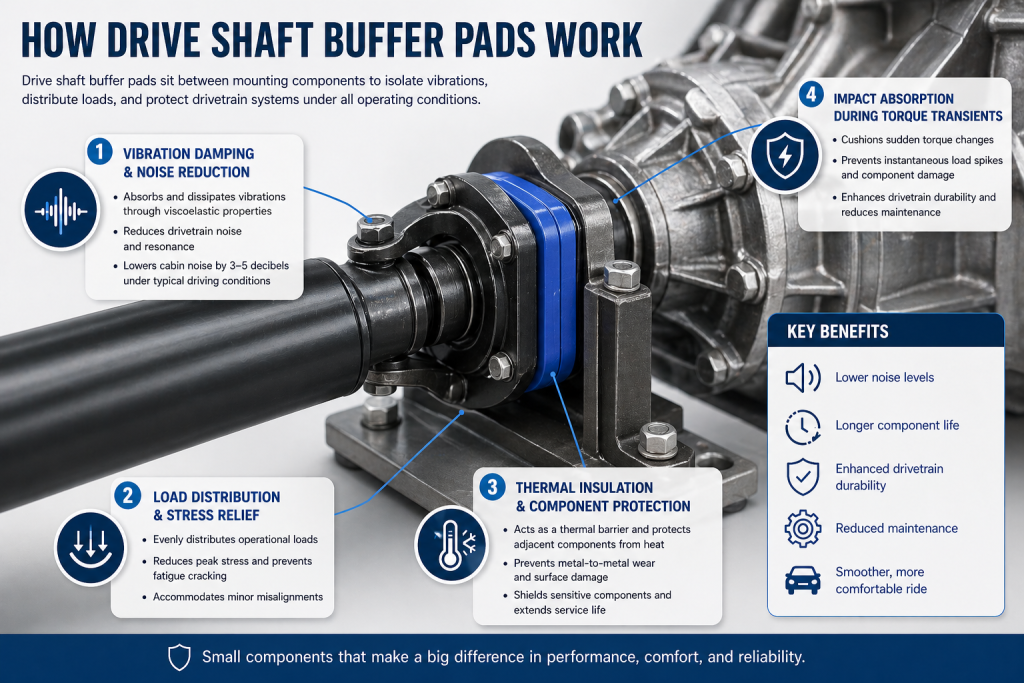
2. Load Distribution and Stress Relief
During acceleration and deceleration, drive shafts are subjected to axial thrust forces that can create uneven pressure on mounting surfaces. Buffer pads conform to surface irregularities, increasing contact area and evenly distributing the load.
This stress-relieving effect protects critical components such as drive shaft flanges and transmission tail housings from fatigue cracking. In heavy-duty applications, buffer pads also accommodate minor misalignments without inducing binding forces. The materials are chosen for their compression set resistance, ensuring consistent performance over hundreds of thousands of operational cycles.
3. Thermal Insulation and Component Protection
Drive shafts can reach high temperatures during operation, which can affect nearby components such as electronic sensors or hydraulic lines. Buffer pads act as thermal barriers, preventing heat transfer and helping maintain optimal operating temperatures for sensitive systems.
In addition, buffer pads protect mating surfaces from abrasive wear caused by metal-to-metal contact during shaft movement. This sacrificial layer prevents scoring or gouging, which is especially important in off-road vehicles experiencing extreme angular displacements.
4. Impact Absorption During Torque Transients
Sudden torque changes, such as those from gear shifts or traction control interventions, generate transient forces that stress drivetrain components. Buffer pads absorb these impacts, reducing instantaneous load spikes that could damage universal joints or slip yokes.
High-quality buffer materials exhibit progressive stiffness: they remain compliant under normal loads but provide increasing resistance during extreme forces. This dual behavior ensures drivetrain integrity during aggressive driving or sudden obstacles, contributing to overall durability and lowering maintenance requirements.
Conclusion:
Although small, drive shaft buffer pads are vital for a reliable and comfortable driving experience. They dampen vibrations, distribute loads, insulate thermally, and absorb torque impacts, protecting the drivetrain and enhancing component longevity. Proper selection, installation, and maintenance of these pads are essential for optimal vehicle performance.
Boost durability and reduce noise—get your custom drive shaft solution now.