 简体中文
简体中文 English

Selection of power output shaft connection device
Key Factors Influencing Power Output Shaft Connection Selection
Transmission System Requirements
The selection of power output shaft connections hinges on the mechanical characteristics of the driving system. Electric motors, internal combustion engines, and turbines exhibit distinct torque profiles and operational stability. For instance, systems powered by multi-cylinder diesel engines require elastic couplings to mitigate torsional vibrations caused by uneven cylinder firing. These vibrations, influenced by engine cylinder count and combustion consistency, necessitate materials with high damping coefficients in coupling components.
In agricultural machinery applications, the connection between tractor power take-off (PTO) shafts and implements must accommodate variable load conditions. Standard 540 RPM PTO shafts typically employ 6-spline connections for low-power implements, while 1000 RPM high-power applications demand 21-spline configurations with integrated slip clutches. This differentiation prevents mechanical overload in high-torque scenarios.
Load Characteristics and Operating Conditions
The dynamic nature of working loads significantly impacts connection selection. Systems experiencing frequent starts, stops, or direction reversals require couplings with built-in shock absorption. Agricultural balers, for example, need PTO shafts with 50mm minimum telescopic travel to compensate for height adjustments during operation. The working angle of PTO connections should remain within 15-20 degrees to prevent premature wear, with regular lubrication of protective sleeves being mandatory.
Heavy-duty industrial applications involving mining equipment demonstrate different requirements. Large-scale gear reducers often utilize multi-tooth engagements rather than conventional keyway connections to distribute loads evenly across multiple contact points. This approach reduces stress concentrations and extends component lifespan under continuous high-torque conditions.
Environmental and Maintenance Considerations
Operating environments dictate material selection for shaft connections. Marine applications require corrosion-resistant stainless steel couplings, while dusty mining environments necessitate sealed gear couplings with periodic grease replenishment. The maintenance interval for elastic couplings in agricultural settings typically extends to six months, whereas gear couplings in industrial applications may require lubrication every three months.
Emergency protection mechanisms form another critical consideration. High-power agricultural implements must incorporate slip clutches rated for 65kW minimum to prevent damage to tractor PTO systems. Similarly, industrial applications employing large inertia loads benefit from overrunning clutches that disengage during power interruptions, protecting both driving and driven components.
Connection Type Selection Guidelines
Rigid vs. Flexible Coupling Comparison
Rigid couplings excel in precision applications requiring exact alignment. Membrane couplings, for instance, maintain concentricity within 0.1mm while transmitting torque through thin steel diaphragms. These characteristics make them suitable for CNC machine tool spindles where angular misalignment must remain below 0.5 degrees.
Flexible couplings offer superior misalignment compensation. Universal joints permit angular deviations up to 30 degrees but require paired installation to prevent bending moments. Elastic couplings with polyurethane elements absorb vibrations while accommodating ±0.5mm radial and ±1 degree angular misalignments, making them ideal for conveyor systems experiencing foundation settling.
Keyway and Spline Connection Specifications
Standard keyway dimensions follow GB/T 1095-2003 specifications, with tolerance matching being crucial. Input shaft keyways typically employ N9/h8 transition fits to prevent loosening, while coupling bore keyways use D10/h8 clearance fits for easy assembly. Spline connections in heavy-duty applications distribute loads across multiple teeth, with involute profiles being preferred for their self-centering characteristics.
The length of keyway components should not exceed 1.5 times the shaft diameter to avoid stress concentration. In agricultural PTO applications, 6-spline shafts measure 23mm in major diameter with 19mm minor diameter, while 21-spline configurations for high-power systems feature 34mm major and 28mm minor diameters.
Specialized Connection Solutions
Hydraulic couplings provide overload protection through shear pin mechanisms. When torque exceeds 150% of rated capacity, these pins fracture to disconnect the load, preventing damage to expensive gearboxes. This principle finds application in wind turbine yaw drives where sudden wind gusts could otherwise destroy mechanical components.
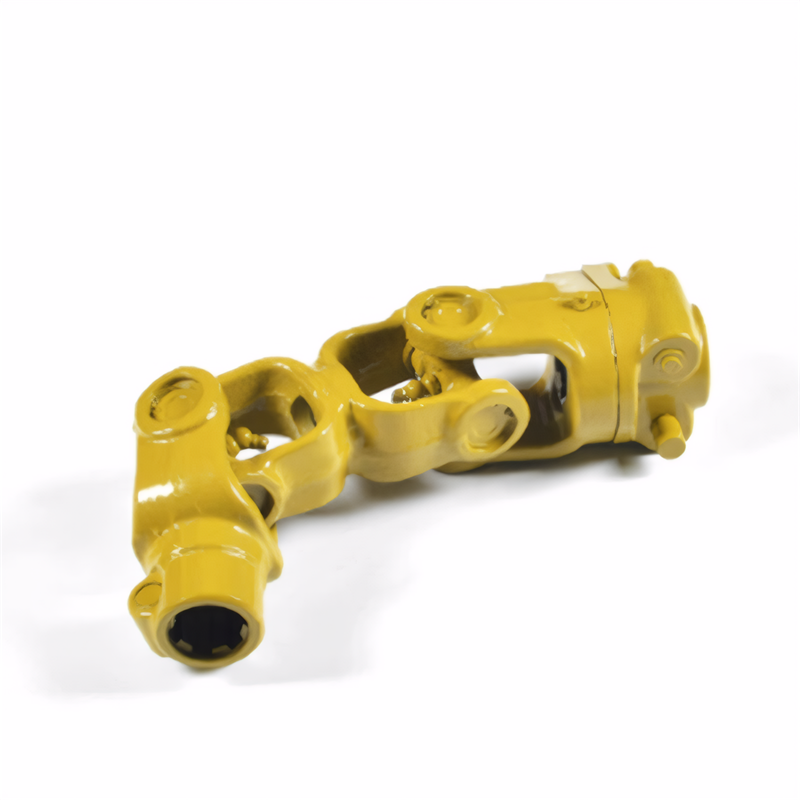
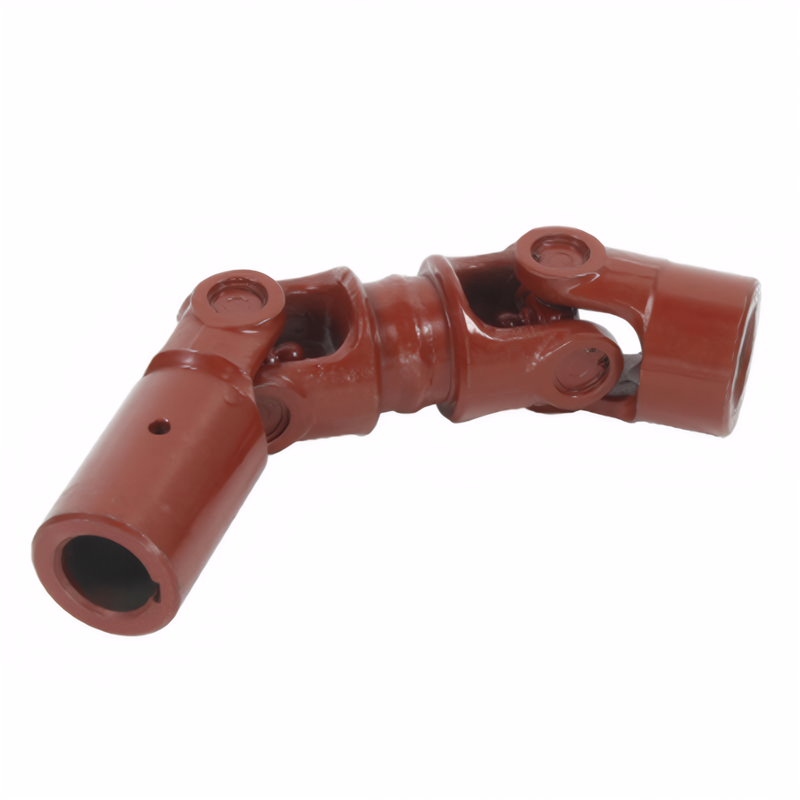
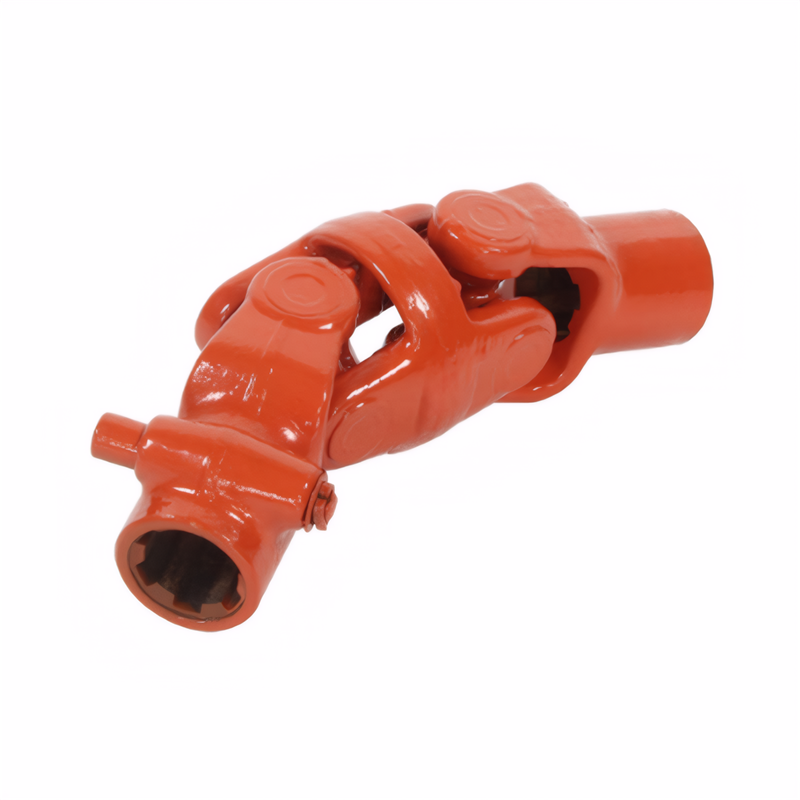
For applications requiring large angular misalignments exceeding 5 degrees, double universal joint assemblies become necessary. These configurations, commonly seen in tilting conveyor systems, use intermediate shafts to cancel out bending stresses. However, they require precise phase alignment during installation to prevent vibration amplification.
Implementation Best Practices
Installation and Alignment Procedures
Proper alignment during installation prevents premature failure. Dial indicators should measure radial runout within 0.1mm and axial displacement below 0.05mm. In agricultural settings, PTO shaft alignment becomes particularly critical as misalignment exceeding 15 degrees can cause universal joint failure within 50 operating hours.
Bolt tightening sequences follow specific patterns to ensure uniform clamping force. Cross-pattern tightening prevents frame distortion in heavy machinery, while torque values must account for material coefficients of friction. Stainless steel couplings in marine environments, for example, require 20% higher torque values than carbon steel equivalents due to lower friction coefficients.
Operational Monitoring and Maintenance
Vibration analysis serves as an early warning system for connection degradation. Accelerometers mounted on couplings can detect frequency shifts indicating worn elastic elements or misalignment. In wind turbine applications, this monitoring enables predictive maintenance, reducing downtime by 30% compared to reactive approaches.
Lubrication schedules vary by coupling type. Gear couplings in industrial settings require lithium-based grease replenishment every 3 months, while agricultural PTO shafts need annual inspection of protective sleeves. Elastic couplings with polyurethane elements should be checked biannually for cracks, with replacement recommended after 5 years of service regardless of visual condition.
Safety and Compliance Standards
Emergency stop systems must integrate with power transmission components. In agricultural tractors, PTO brakes must halt shaft rotation within 5 seconds of disengagement to comply with OECD safety standards. Industrial machinery employing large flywheels requires redundant braking systems capable of absorbing kinetic energy equivalent to 125% of rated torque.
Operator training programs should emphasize proper engagement sequences. Starting machinery with PTO-driven implements in contact with obstacles accounts for 18% of agricultural accidents. Clear labeling of rotation directions and maximum speed ratings on all shaft components helps prevent misuse.
 Transmission shaft medical equ
 Transmission shaft safety prot
 Transmission shaft compatibili
Method for detecting the stabi
Transmission shaft compatibili
Method for detecting the stabi