 简体中文
简体中文 English

Transmission shaft safety protection standard
Transmission Shaft Safety Protection Standards: Key Requirements and Implementation Guidelines
Physical Barrier Design and Material Specifications
Transmission shafts operating within 2 meters of ground level must be fully enclosed by fixed guards to prevent accidental contact with rotating components. For exposed shafts with keyways or protruding fasteners, the guard design must maintain a minimum clearance of 12mm between the shaft surface and inner guard wall to eliminate entanglement risks. When using metal mesh guards, the aperture size should not exceed 50mm to prevent finger insertion, while solid panel guards must withstand impact forces exceeding 100kJ/m² as verified through standardized testing.
In high-speed applications exceeding 1,000 RPM, guards must be engineered to avoid resonance frequencies within ±10Hz of the shaft's operating range. This requires vibration analysis during the design phase to prevent structural failure. For corrosion-prone environments, stainless steel guards with chromium content ≥16% are recommended, with surface coatings maintaining 60-80μm thickness for both protection and visibility.
Installation and Maintenance Protocols
Proper installation mandates that guards extend from the first fixed bearing housing to the terminal end of the shaft assembly. In systems with multiple shafts, overlapping guard sections must maintain ≥50mm linear contact to eliminate exposure gaps. For agricultural machinery with working widths >280cm, clutch protection mechanisms must automatically disengage power transmission when guards are removed or displaced.
Maintenance procedures require monthly inspections for guard integrity, focusing on:
- Fastener tightness to prevent vibration-induced loosening
- Surface coating condition to identify corrosion early
- Clearance verification between guards and rotating parts
Any modifications to guard structures must be documented with engineering approval, and replacement parts must match original specifications. During maintenance, lockout/tagout procedures must isolate energy sources before guard removal.
Specialized Protection for High-Risk Configurations
Vertical Shaft Applications
For vertical transmission shafts in conveyor systems, lower guard sections must extend ≥200mm beyond the lowest rotating component to prevent falling object hazards. Where shafts penetrate floor levels, double-layer guards with interlocking covers are required to contain tool drops and debris.
Coupling Protection
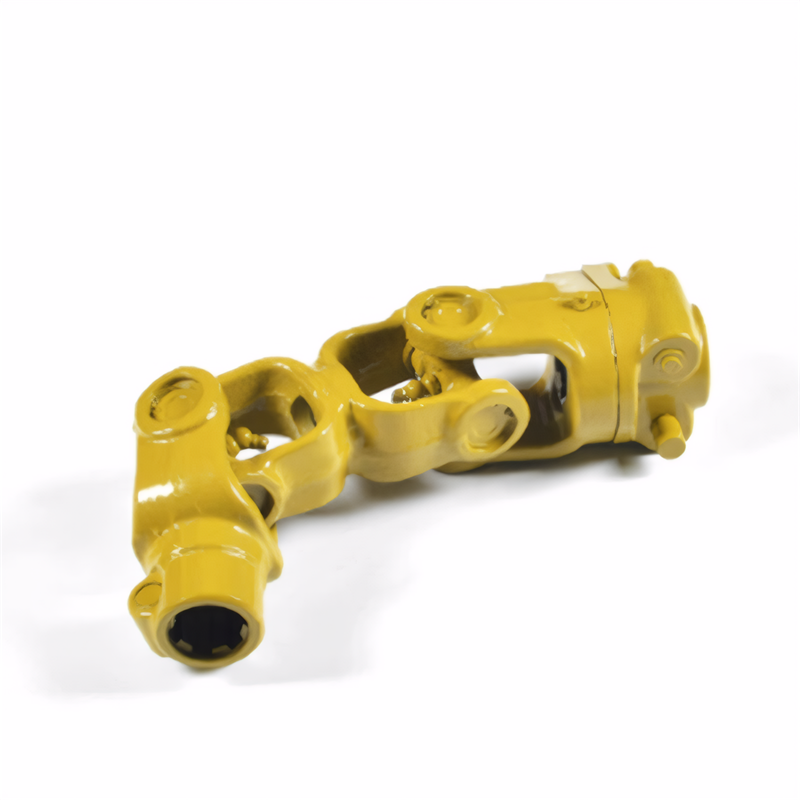
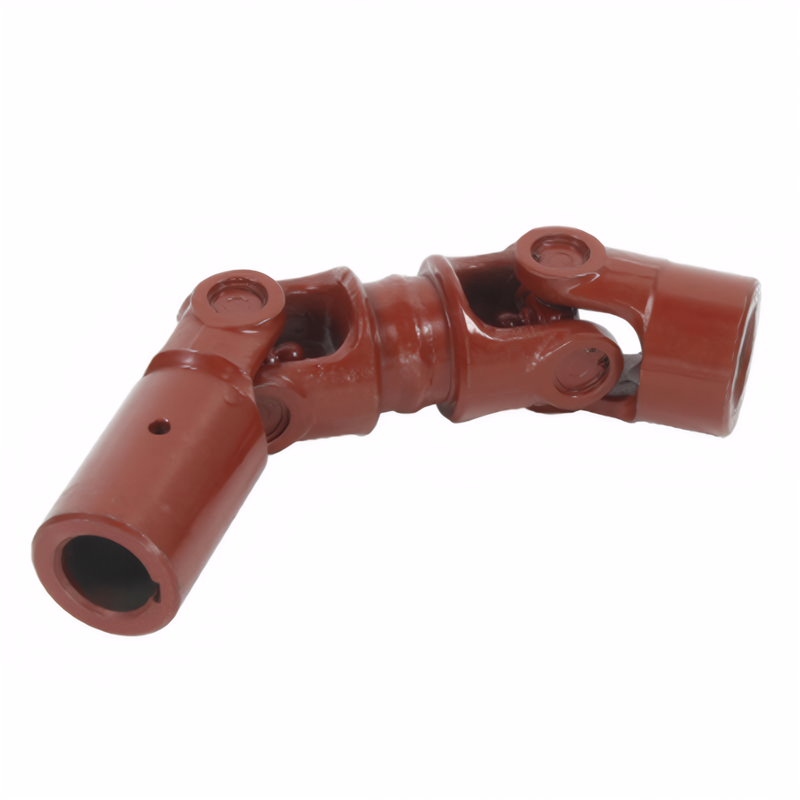
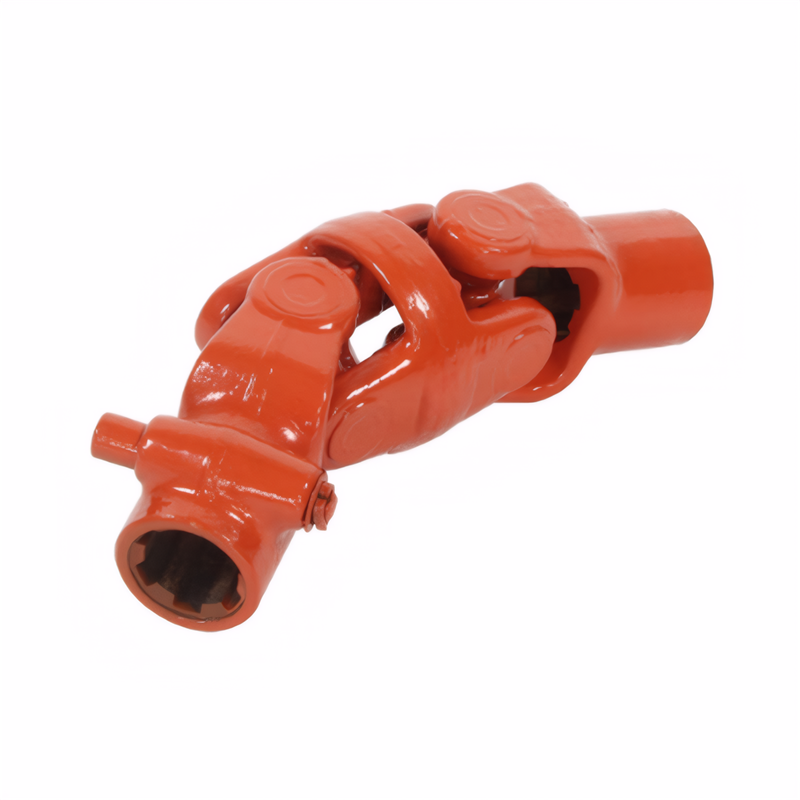
Power transmission couplings must eliminate exposed bolts through recessed designs or protective caps. When using flexible couplings, the guard radius should exceed the coupling's maximum deflection range by 20% to accommodate thermal expansion. For cardan shafts in automotive applications, telescopic guards with overlapping sections must maintain continuous coverage during articulation.
Emergency Stop Integration
All transmission systems must incorporate red-colored emergency stop buttons positioned within 0.6m of operator stations. These devices should trigger instantaneous power cutoff with brake engagement times <0.2 seconds for high-inertia systems. After activation, manual reset procedures must require deliberate operator action to prevent accidental restarts.
Compliance Verification and Documentation
Manufacturers must provide technical documentation demonstrating:
- Guard design calculations showing compliance with impact resistance standards
- Vibration analysis reports confirming resonance avoidance
- Material certificates verifying chromium content for stainless components
- Installation diagrams with dimensional tolerances
End-users should maintain inspection logs documenting:
- Guard condition assessments
- Emergency stop functionality tests
- Lockout/tagout procedure adherence
- Training records for personnel accessing protected areas
These standards align with ISO 14120 (Safety of Machinery - Guards) and ANSI B11.19 (Performance Criteria for Safeguarding), requiring periodic third-party audits for systems operating in hazardous environments. By implementing these measures, organizations can reduce transmission shaft-related injuries by up to 92% according to OSHA accident analysis data.
 Transmission shaft medical equ
 Transmission shaft safety prot
 Transmission shaft compatibili
Method for detecting the stabi
Transmission shaft compatibili
Method for detecting the stabi