 简体中文
简体中文 English

The installation space dimensions of the drive shaft
Transmission Shaft Installation Space Dimensions: Key Considerations for Vehicle Design
Transmission shafts are critical components in automotive drivetrains, responsible for transferring torque from the engine to the wheels. Proper installation space dimensions are essential to ensure optimal performance, durability, and safety. This article explores the key factors influencing transmission shaft installation space requirements, including length constraints, angle limitations, and clearance considerations.
Length Constraints for Passenger and Commercial Vehicles
The installation length of a transmission shaft varies significantly between passenger and commercial vehicles. For passenger cars, the typical length ranges from 500mm to 1,500mm, depending on the vehicle's wheelbase and drivetrain configuration. Compact cars often utilize shorter shafts, while luxury sedans or SUVs with extended wheelbases may require longer shafts to accommodate the increased distance between the transmission and differential.
Commercial vehicles, such as trucks and buses, demand longer transmission shafts due to their larger wheelbases and heavier loads. The standard length for commercial vehicle shafts ranges from 1,800mm to 3,500mm, with some specialized vehicles exceeding 6,000mm when using multi-section shafts with intermediate supports. For example, a heavy-duty truck designed for long-haul transportation may require a 3,200mm transmission shaft to connect the engine to the rear axle effectively.
Segmented transmission shafts, commonly used in commercial vehicles, impose additional constraints. Each section of a segmented shaft should not exceed 1,800mm in length to avoid critical speed issues, which can lead to excessive vibrations and premature failure. This limitation necessitates careful planning of intermediate support points to maintain structural integrity.
Angle Limitations and Universal Joint Configuration
The operating angle of a transmission shaft is a critical factor influencing its installation space requirements. For single universal joint (U-joint) configurations, the recommended operating angle should not exceed 3° under normal driving conditions. Exceeding this limit can cause uneven angular velocity transmission, leading to vibrations, noise, and accelerated wear of drivetrain components.
In rear-wheel-drive vehicles, the maximum allowable angle for a single U-joint configuration is typically limited to 15°–20° to prevent excessive stress on the joint. However, this range should be used sparingly, as prolonged operation at high angles can significantly reduce the lifespan of the U-joint.
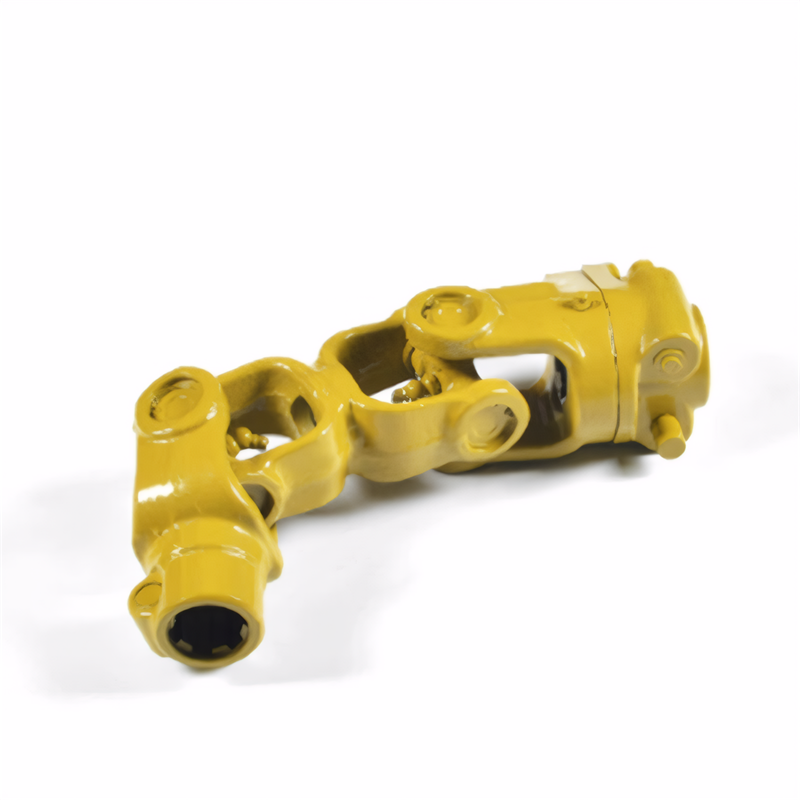
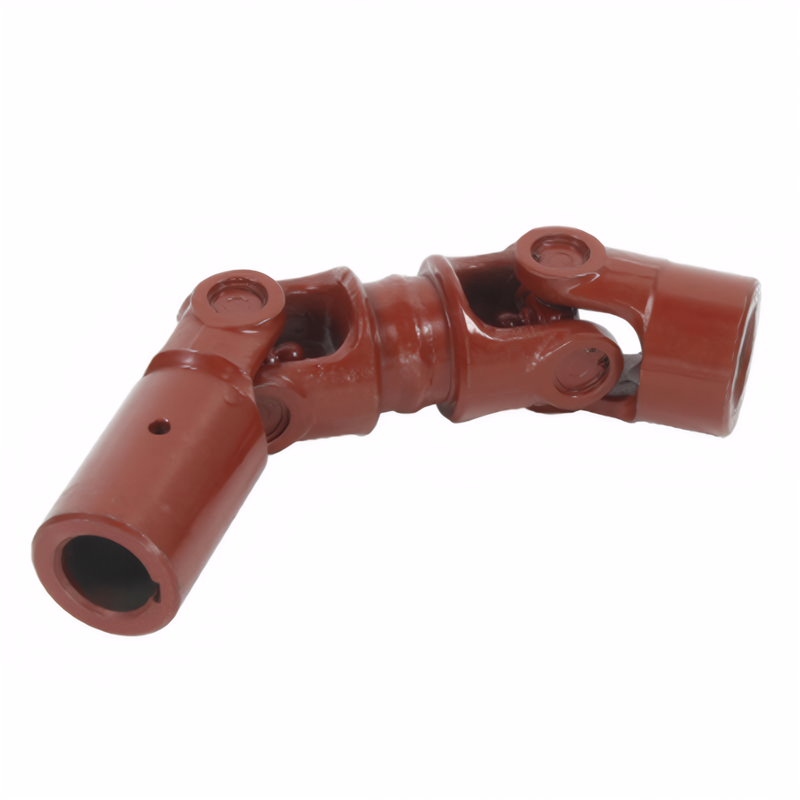
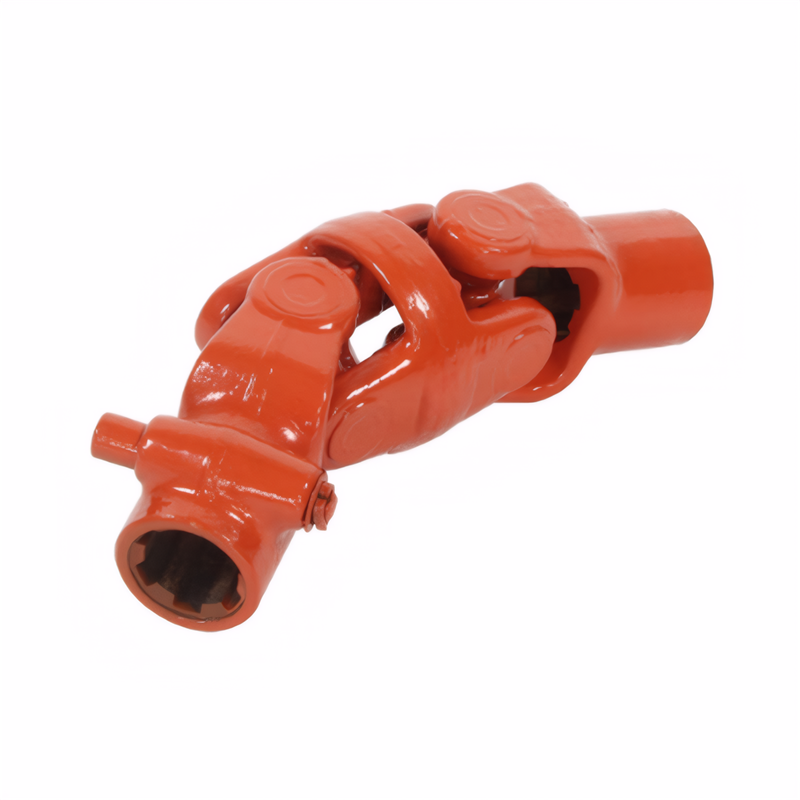
Dual U-joint configurations, which utilize two joints to achieve more uniform torque transmission, offer greater flexibility in angle management. By ensuring that the angles of both joints are equal and the connecting flanges are coplanar, the system can achieve near-isokinetic rotation with an error margin of less than 2.5%. This setup allows for operating angles of up to 5°–10° while maintaining smooth power delivery.
For non-coplanar dual U-joint systems, where achieving coplanarity is challenging, the phase angle between the two joints must be carefully adjusted. The formula θ = φ1 ± φ2 or θ = 180° − (φ1 ± φ2) is used to calculate the required phase angle, where θ represents the angle between the two flanges, and φ1 and φ2 are the angles of the first and second U-joints, respectively. Proper alignment ensures minimal vibrations and extends the service life of the transmission shaft.
Clearance Requirements and Dynamic Considerations
Adequate clearance around the transmission shaft is essential to accommodate dynamic movements and prevent interference with other components. During vehicle operation, the transmission shaft undergoes axial and radial displacements due to changes in torque, temperature, and suspension travel. For example, a front-wheel-drive vehicle's half-shaft may experience axial movement of up to 20mm during hard acceleration or braking.
To prevent contact with surrounding parts, such as exhaust systems, fuel lines, or body panels, a minimum clearance of 50mm is generally recommended around the entire length of the shaft. This clearance should be increased to 100mm in areas prone to high temperatures or mechanical stress, such as near the engine block or differential housing.
Dynamic balance requirements also influence clearance dimensions. High-speed transmission shafts, operating above 5,000 RPM, must adhere to stricter imbalance standards, typically ≤8g·cm/m, to minimize vibrations. Achieving this balance often requires precise machining of the shaft and may necessitate additional clearance to account for potential runout during operation.
Furthermore, the installation space must consider the shaft's slip travel, which allows for axial movement during suspension articulation. For instance, a rear-wheel-drive truck's transmission shaft may require a slip travel of 30mm to 50mm to prevent binding or separation under full load conditions. This slip travel must be factored into the overall clearance calculations to ensure seamless operation.
 Transmission shaft medical equ
 Transmission shaft safety prot
 Transmission shaft compatibili
Method for detecting the stabi
Transmission shaft compatibili
Method for detecting the stabi