


In this article
The drive shaft is the “backbone” of your vehicle’s power delivery. While it usually doesn’t get much attention, it’s the component that actually determines if your car can move or not. Today, I’m going to break down each part of the drive shaft in a way that’s both professional and easy to digest. We’ll look at three common real-world driving scenarios to help you clearly understand how the structure meets the function.
First, let’s clear up a core fact: a drive shaft isn’t just a simple metal pipe. It’s actually a complex assembly made of several parts working in sync, including the drive shaft tube, U-joints (universal joints), slip yokes, differential flange yokes, center support bearings, and CV joints (constant velocity joints). These parts have specific jobs and must work together to get power from the engine to the wheels smoothly.
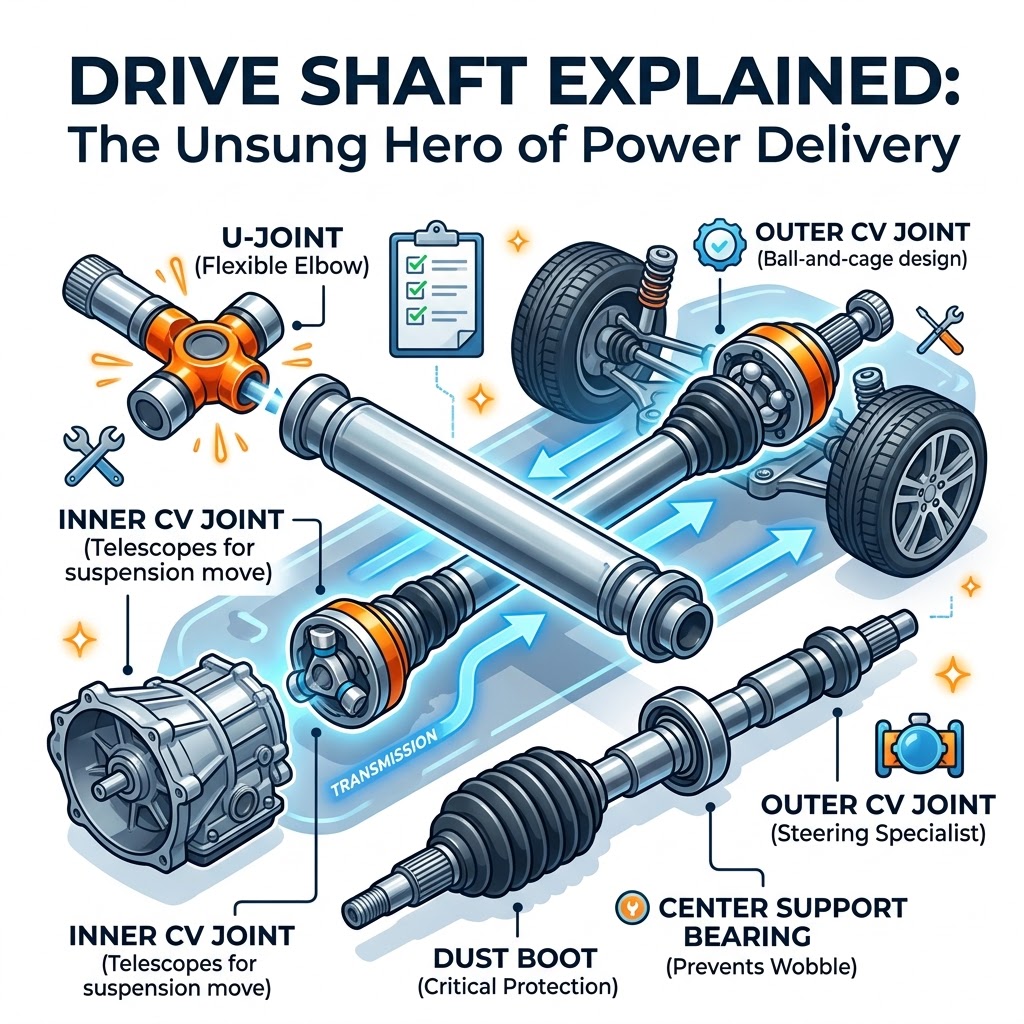
Breaking Down the Drive Shaft Components
A lot of drivers ask what exactly makes up a drive shaft. To answer that, we’ll dismantle the assembly piece by piece following the logic of how power flows, using everyday driving examples to keep things simple.
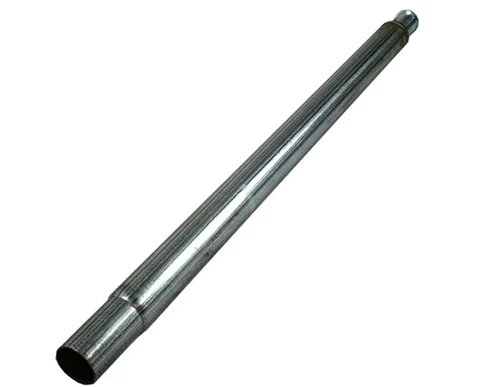
The Drive Shaft Tube — The Main Body The drive shaft tube is the “main highway” for power. It’s a long, cylindrical body that carries the torque produced by the engine from the transmission at the front to the differential at the back.
- Daily Drivers: In standard cars like a Toyota Corolla or Volkswagen Jetta, the shaft is usually a single, solid piece because the distance it covers is relatively short. This design is simple and stable.
- The Big Guys: Long-wheelbase vehicles like trucks or buses use multi-section shafts with center support bearings in the middle. Without these supports, a long metal pipe would wobble like a wet noodle at high speeds, which eventually leads to it snapping or breaking—a total disaster.
- Materials: Most everyday cars use seamless steel because it’s tough and cost-effective. High-performance cars, however, often use aluminum or even carbon fiber to shed weight, helping the car accelerate faster while staying fuel-efficient.
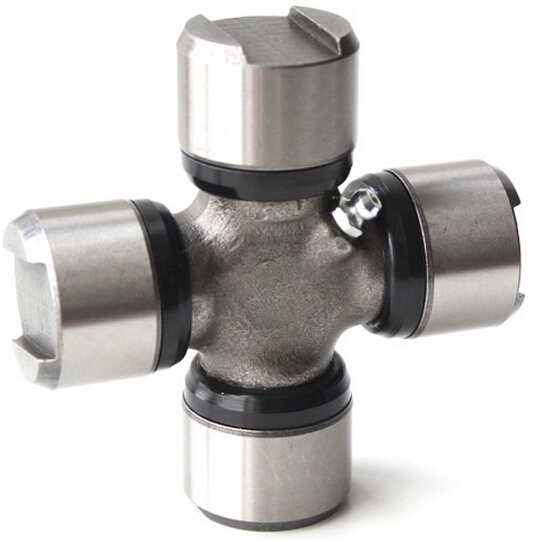
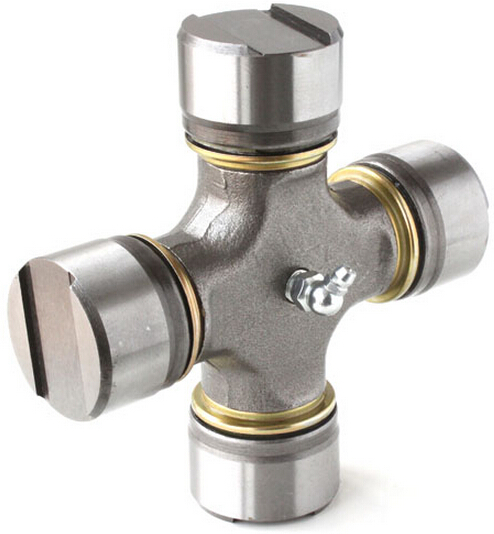
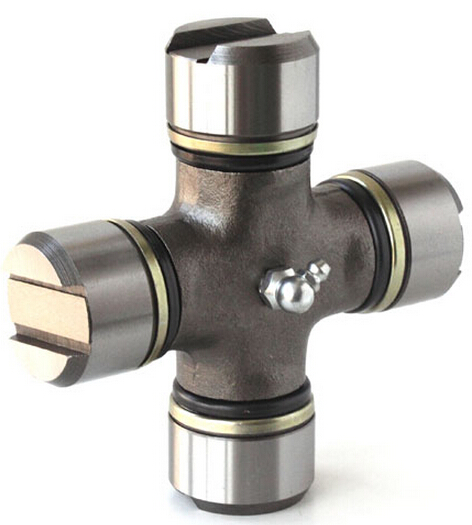
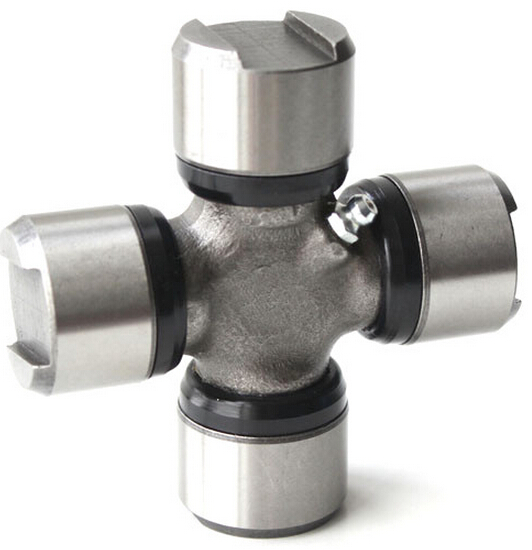
U-Joints — The Flexible Elbows Universal joints, or U-joints, are those cross-shaped pieces at the ends of the shaft. Think of them as the “wrists” of the drive shaft. Their main job is to compensate for angle changes between the engine and the wheels. As you drive, the road surface causes your suspension to move, which constantly changes the relative angle between the engine and wheels. Without these flexible joints, the drive shaft would be too rigid and would snap under the pressure.
- Scenario: If you’re taking an SUV off-road over rough terrain, the body will bounce and tilt significantly. The U-joints rotate flexibly to keep the power flowing without interruption.
- The “Uh-Oh” Sign: If a U-joint is failing, you’ll hear a “clunking” or “thumping” sound from under the car when hitting bumps. In the worst-case scenario, the joint can seize up entirely, leaving you stranded.
There are two main types of U-joints:
- Standard Cross-Bearing: Common in everyday cars like a Nissan Sentra or Honda Civic. They are durable, simple, and affordable.
- Double Cardan (Double U-Joint): Mostly found in trucks and heavy-duty off-roaders like the Jeep Wrangler. They allow for even steeper angles while keeping the power delivery smooth.
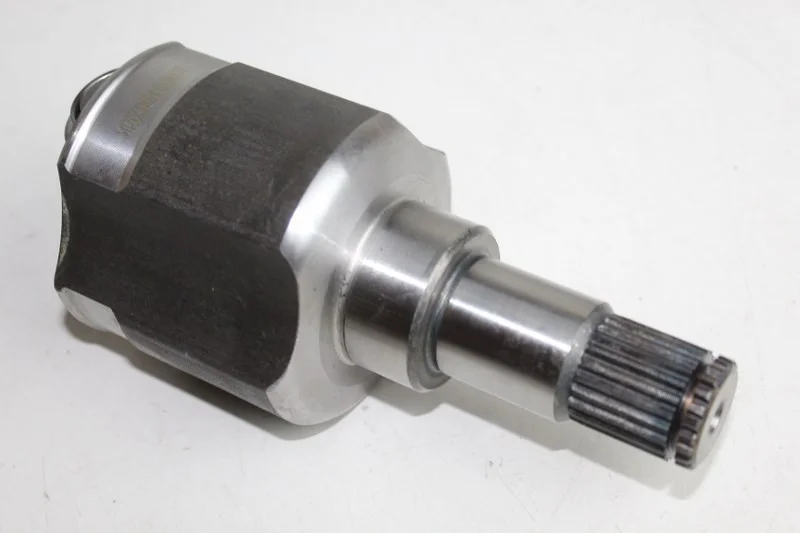
Inner CV Joints — The Telescopes The inner CV joint sits near the transmission or differential. Its “superpower” is telescoping. When you drive over a speed bump, the wheels move up and down, which actually changes the physical distance between the wheel and the transmission. The inner CV joint slides back and forth in a track to make sure the shaft doesn’t get crushed or pulled apart like taffy. Most of these use a “tripod” design with three rollers, which is compact and strong. You’ll find these in front-wheel-drive (FWD) cars like the Honda Fit and all-wheel-drive (AWD) models because they save a lot of space under the chassis.
Outer CV Joints — The Steering Specialist While the inner joint handles the “up and down,” the outer CV joint handles the “left and right”. These are located near the wheels and their job is to keep power flowing even when you’re turning. Even if you have the steering wheel turned all the way, these joints ensure the power delivery is steady and vibration-free.
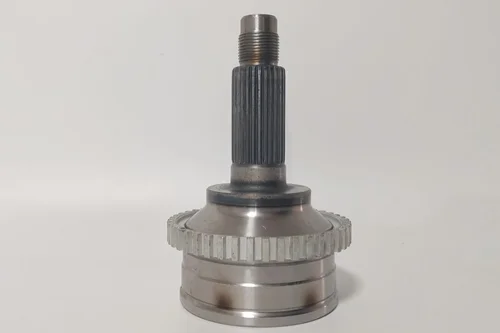
Most outer CVs use a “ball-and-cage” design that allows for multi-angle rotation.
- The Test: Think about when you’re backing into a tight parking spot with the wheel fully turned. That’s your outer CV joint working hard.
- The Sign of Trouble: If this joint is damaged, you’ll hear a rhythmic “clicking” or “popping” sound during sharp turns. If it fails completely, you lose all power to that wheel, and the car becomes unsafe to drive.
In short: the inner CV joint handles the suspension’s vertical movement, while the outer CV joint handles the steering angles. Together, they keep the drive shaft both flexible and stable.
The Dust Boot (CV Boot) — The Unsung Hero The dust boot is just a ribbed rubber sleeve wrapped around the CV joint, but don’t let its simplicity fool you. It is a critical protector. Its mission is to keep the thick lubricating grease in and keep dirt, water, and road grime out. Since CV joints have precision moving parts that need grease to stay cool and move freely, a ripped boot is bad news. If the grease leaks out and dirt gets in, the joint will wear out or seize very quickly. Replacing a whole drive shaft is expensive, but replacing a $20 boot is cheap. Always check these for cracks or leaks during your routine maintenance.
How it All Connects (The Simple Version)
To understand where the drive shaft fits in the “chain of command,” look at these three connection points:
- Transmission: This is the source. The engine sends torque here, and the transmission passes it to the drive shaft.
- Differential: The drive shaft carries that torque to the differential. The differential then splits the power between the left and right wheels.
- Wheels: This is the finish line where the power finally hits the road to move you forward or backward.
Different car layouts handle this differently:
- Rear-Wheel Drive (RWD): Uses one long drive shaft connecting the transmission to the rear differential (e.g., BMW 3 Series).
- Front-Wheel Drive (FWD): Doesn’t use a long shaft. Instead, it uses two short “CV axles” to connect the transmission directly to the front wheels.
- 4WD / All-Wheel Drive (AWD): These usually have two drive shafts—one for the front and one for the rear—to power all four wheels (e.g., Toyota Tacoma or Jeep Wrangler).
Drivetrain Cheat Sheet
| Layout | Drive Shaft Style | Common Examples |
| Rear-Wheel Drive (RWD) | One long shaft to the back. | BMW 3 Series, Ford Mustang |
| Front-Wheel Drive (FWD) | Two short “CV axles” to the front wheels. | Honda Civic, VW Golf |
| All-Wheel Drive (AWD/4WD) | Usually two shafts (front and rear). | Jeep Wrangler, Toyota Tacoma |
Summary
The drive shaft assembly is a team effort that can be summarized as: the Body (Tube) + Flexible Connections (U-joints and CV joints) + Protection (Dust Boots). Understanding these parts helps you know exactly what to look for during a car check-up, potentially saving you from a massive repair bill down the road. Since this is the “core link” of your car’s movement, keep an ear out for those weird noises and stay on top of your maintenance.