 简体中文
简体中文 English

The vibration frequency range of the drive shaft
Understanding Transmission Shaft Vibration Frequency Ranges in Automotive Systems
Transmission shafts in automotive systems are critical components that transfer power from the engine to the drivetrain. However, they are prone to vibrations that can affect vehicle performance, durability, and passenger comfort. This article delves into the vibration frequency ranges associated with transmission shafts, their causes, and their implications.
Low-Frequency Vibrations (4 Hz to 40 Hz)
Low-frequency vibrations, typically ranging from 4 Hz to 40 Hz, are often the most perceptible to drivers and passengers. These vibrations stem from torsional and bending modes of the transmission shaft, as well as forced vibrations induced by engine firing pulses. For instance, a straight-six engine operating at 3,600 rpm generates a 60 Hz firing frequency, which can excite torsional resonances in the drivetrain if alignment is poor.
Symptoms of low-frequency vibrations include steering wheel shudder, floorboard vibrations, and audible clunking noises during acceleration or deceleration. These vibrations are particularly concerning because they fall within the human body’s sensitivity range (4 Hz to 8 Hz for vertical motion and 1 Hz to 2 Hz for horizontal motion), leading to driver fatigue and discomfort over long journeys.
Root causes include unbalanced shafts, misaligned universal joints, or worn drivetrain components. Even minor imbalances (as little as 5 g·cm) can amplify vibrations at these frequencies, making precision balancing essential during manufacturing and maintenance.
Mid-Frequency Vibrations (40 Hz to 500 Hz)
Mid-frequency vibrations, spanning 40 Hz to 500 Hz, are often linked to rotational imbalances and gear mesh harmonics. A typical unbalanced transmission shaft rotating at 3,000 rpm generates a 50 Hz vibration, while a misaligned universal joint with a 2° angle deviation produces a 100 Hz harmonic. These frequencies overlap with engine-induced vibrations, such as a four-cylinder engine’s 2nd-order imbalance at 100 Hz (3,000 rpm × 2 ÷ 60).
Diagnostic challenges arise when multiple sources contribute to mid-frequency noise. For example, a vehicle accelerating in 4th gear at 100 km/h (3,600 rpm) may exhibit a 60 Hz peak noise. Frequency analysis can distinguish whether the source is engine imbalance (60 Hz), transmission shaft imbalance (60 Hz with a 1:1 gear ratio), or tire tread impact (50–200 Hz).
Structural resonances also play a role. A composite transmission shaft with a first-modal frequency of 120 Hz may resonate when excited by a 100 Hz universal joint harmonic, leading to accelerated fatigue. Designers mitigate this by ensuring the shaft’s natural frequency exceeds critical operating speeds by at least 15%.
High-Frequency Vibrations (500 Hz to 4,500 Hz)
High-frequency vibrations, ranging from 500 Hz to 4,500 Hz, are less perceptible to occupants but critical for component longevity. These vibrations often originate from gear mesh interactions, bearing defects, or aerodynamic forces. For instance, a modal test on a truck transmission shaft revealed resonance peaks at 1,250 Hz, 2,000 Hz, and 2,750 Hz during acceleration, correlating with structural bending modes.
At these frequencies, vibrations can induce micro-cracks in shaft materials or loosen fasteners. A study on a commercial vehicle driveline found that vibration amplitudes exceeding 0.5 mm at 2,000 Hz reduced bearing life by 40%. High-frequency excitations also propagate through connected components, such as differential gears or half-shafts, amplifying noise in the cabin.
Advanced diagnostics use laser vibrometry or accelerometers to map high-frequency vibrations. For example, a 3,600 Hz vibration detected near a transmission shaft flange may indicate a loose bolt or cracked weld, requiring immediate inspection.
Critical Factors Influencing Vibration Frequencies
Several design and operational factors dictate vibration frequency ranges:
- Material Properties: Composite shafts exhibit higher natural frequencies than steel counterparts due to their stiffness-to-weight ratio. A carbon-fiber shaft’s first-modal frequency may exceed 300 Hz, reducing resonance risks.
- Geometric Tolerances: A 0.1 mm radial runout in a flange can shift vibration frequencies by 5–10 Hz, altering resonance conditions.
- Operating Speed: Critical speeds occur when rotational frequency matches natural frequencies. For a shaft with a 150 Hz natural frequency, operating above 9,000 rpm (150 Hz × 60) risks resonance.
- Load Conditions: Torque fluctuations from engine firing or road impacts can excite higher-order modes. A sudden 20 N·m torque spike may induce a 300 Hz vibration in a lightweight shaft.
Mitigation Strategies
Addressing vibration frequency issues requires a multi-faceted approach:
- Precision Balancing: Dynamic balancing reduces imbalances to below 1 g·cm, minimizing low-frequency vibrations.
- Modal Tuning: Adjusting shaft lengths or diameters shifts natural frequencies away from excitation ranges.
- Damping Enhancements: Viscoelastic coatings or tuned mass dampers absorb mid- to high-frequency energy.
- Alignment Optimization: Universal joint angles are kept below 1.5° to limit harmonic generation.
By understanding the interplay of vibration frequencies, material properties, and operational conditions, engineers can design transmission shafts that balance performance, durability, and occupant comfort.
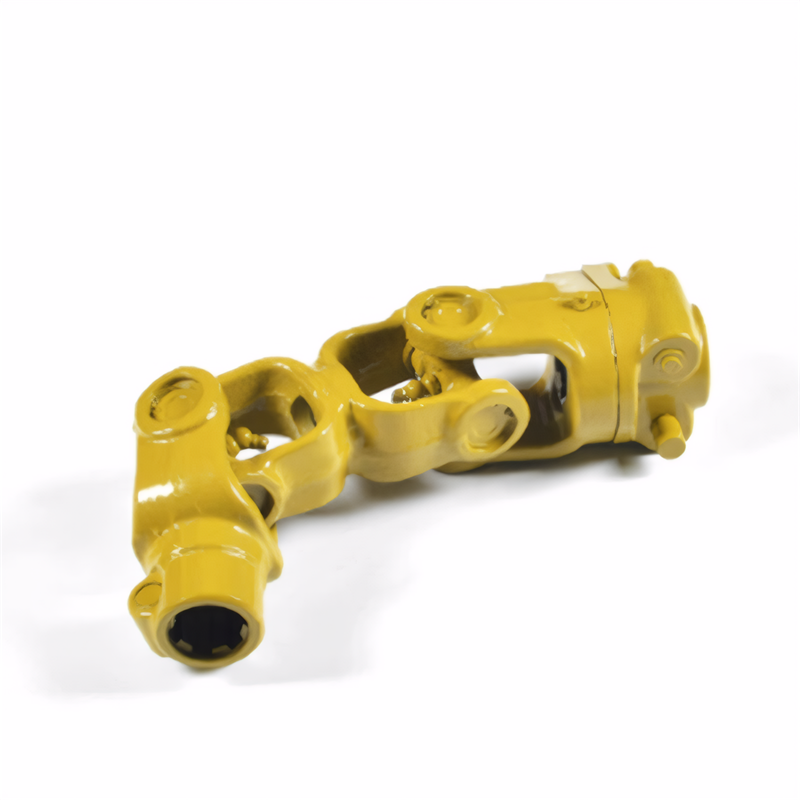 Transmission shaft medical equ
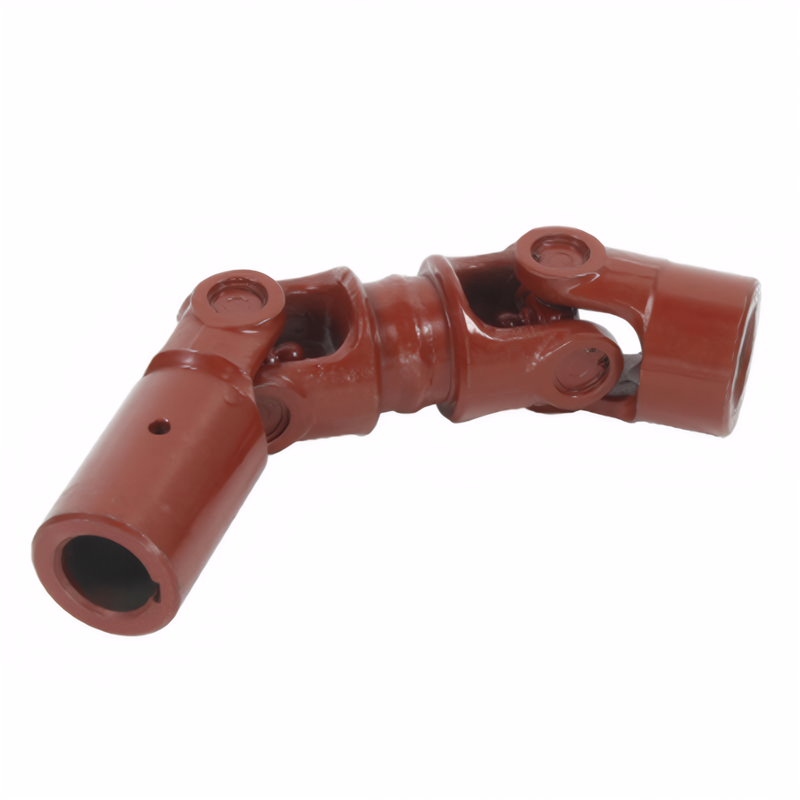 Transmission shaft safety prot
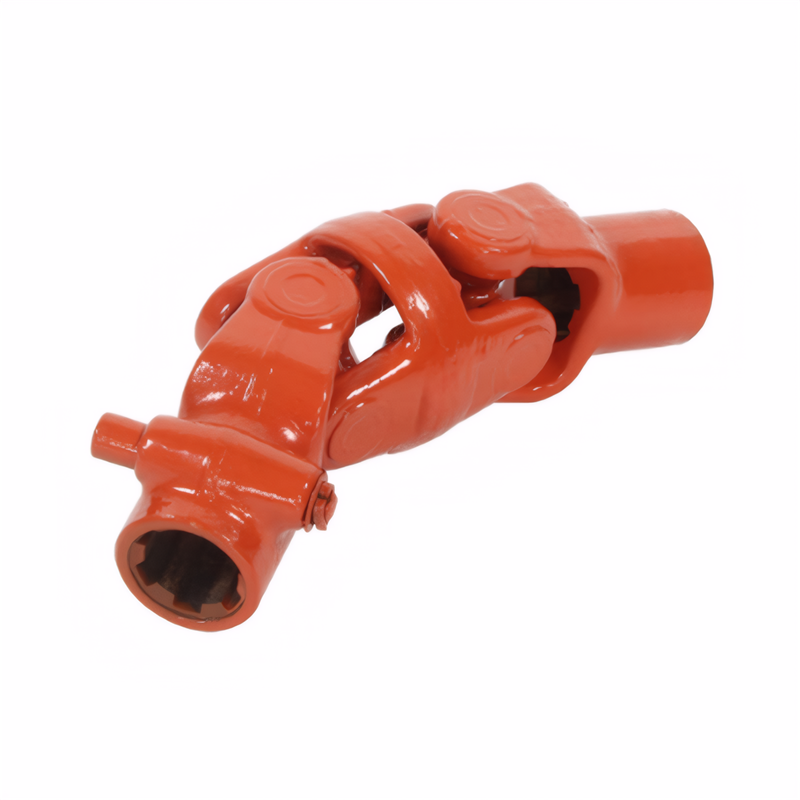 Transmission shaft compatibili
Method for detecting the stabi
Transmission shaft compatibili
Method for detecting the stabi