


A universal joint is a mechanical component that lets power transfer even when the angle between shafts changes. It’s used anywhere the direction of a drive shaft needs to shift. Let’s walk through seven common types and how they actually work in real-world terms.
| Type | Structure & Principle | Key Feature | Typical Application |
|---|---|---|---|
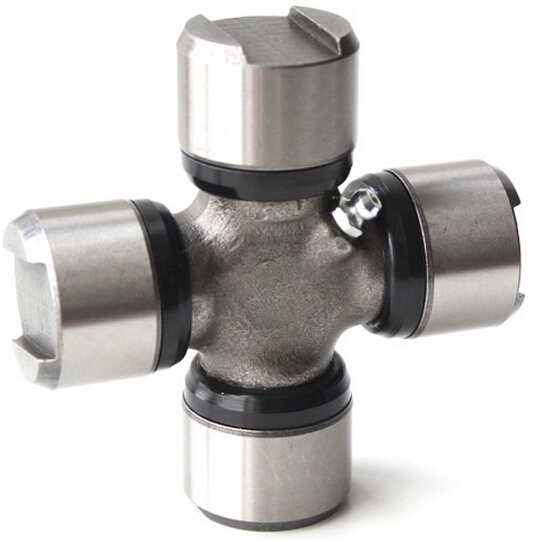
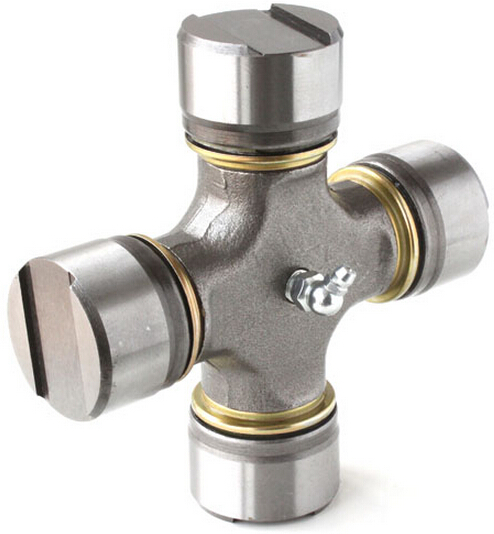
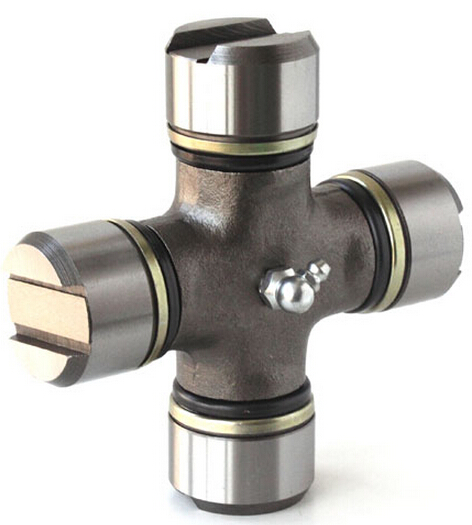
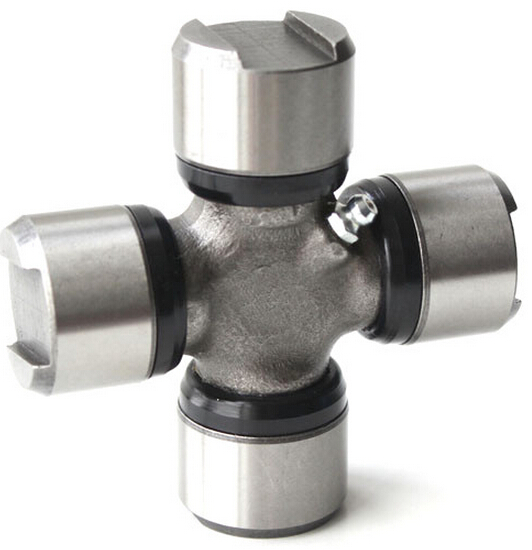
| Cross-Type U-Joint | Uses cross shaft, yokes, and needle bearings to transmit torque at an angle | Non-constant velocity | Widely used in industrial and automotive drive shafts |
| Double U-Joint | Combines two cross joints to reduce speed fluctuation | Near constant velocity | Systems with large shaft angles |
| Ball-and-Fork U-Joint | Steel balls transmit torque through curved grooves | Simple, near CV at small angles | Steering drive axles |
| CV Joint (Ball Cage) | Balls stay on the angle bisector to ensure equal speed | Constant velocity | Automotive drive systems (FWD vehicles) |
| Plunging CV Joint | CV joint with axial sliding capability | Constant velocity + axial movement | Suspension systems, wheel travel compensation |
| Tripod Joint | Three pins with needle bearings allow large angle transmission | Handles large angles | Off-road and heavy-duty vehicles |
| Flexible Joint | Uses rubber deformation to compensate misalignment | Flexible, vibration damping | Engine to transmission connections |
| Three-Ball Pin Joint | Combines ball-and-fork and CV joint features | Compact, good CV performance | High-performance and special vehicles |
1. Cross-Type Universal Joint (Cardan Joint)
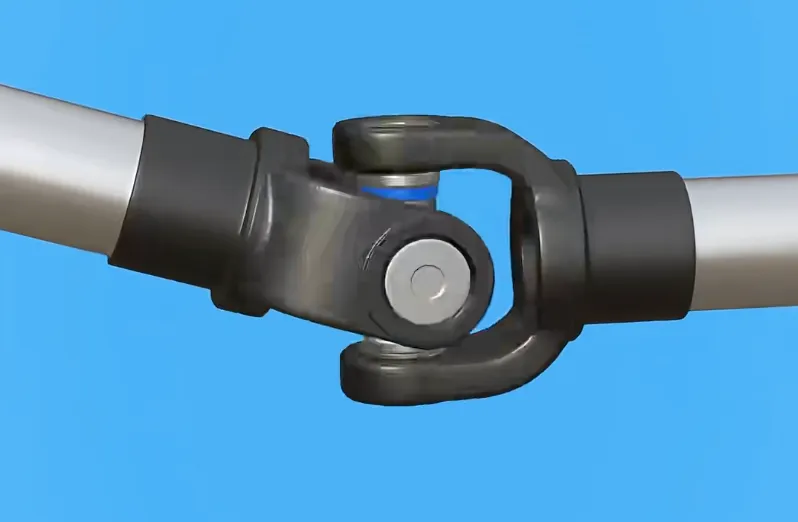
This is the most widely used type, and honestly, the one you’ll see everywhere. It’s made up of a cross shaft, yokes, and needle bearings. When the driving yoke rotates, it turns the cross, which then drives the driven yoke.
Because there’s an angle between the input and output shafts, the speeds aren’t perfectly equal. Even if the input spins at a steady speed, the output speed fluctuates slightly. That’s just how this design behaves.
2. Double Universal Joint
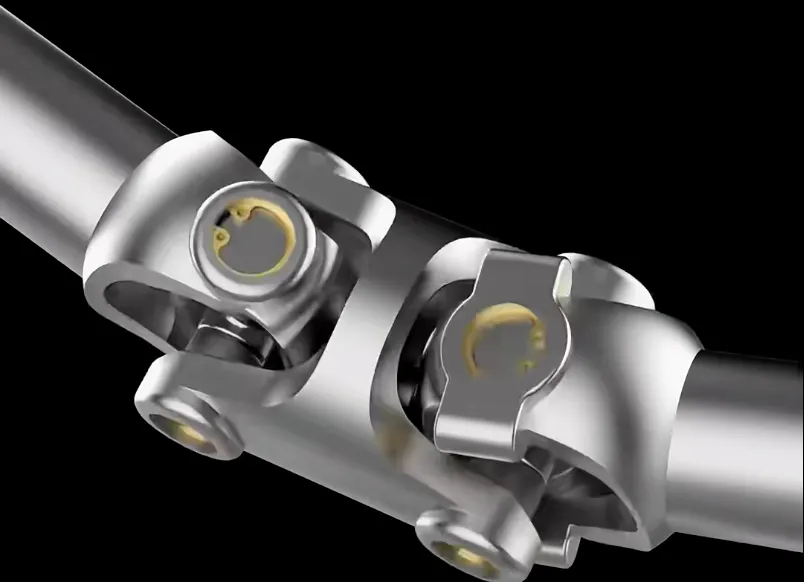
Think of this as two cross-type joints working together as a team. It’s designed to deal with larger angles between shafts while smoothing out those speed fluctuations.
By carefully arranging the angles and positions of the two joints, the output shaft runs much more evenly. It’s not perfect constant velocity, but it gets pretty close.
3. Ball-and-Fork Universal Joint
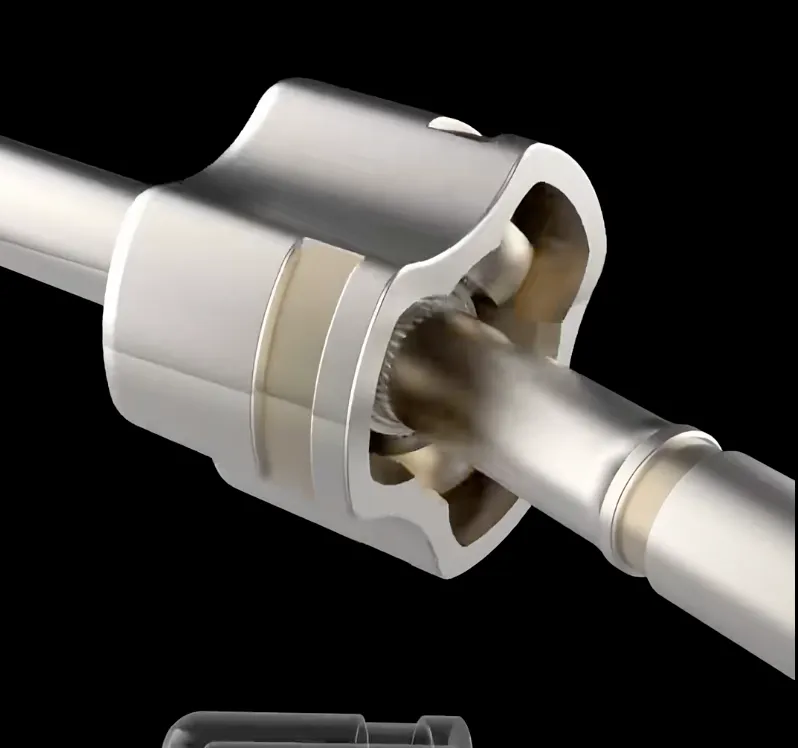
This one has a simpler structure. It includes a driving fork, a driven fork, steel balls, and a centering ball.
Both forks have curved grooves, and the steel balls sit inside them to transmit torque. The centering ball keeps everything aligned.
You’ll usually find this type in steering drive axles, where the angle isn’t too large but smooth, constant motion still matters.
4. Constant Velocity (CV) Joint – Ball Cage Type
This type comes in two versions: fixed and plunging.
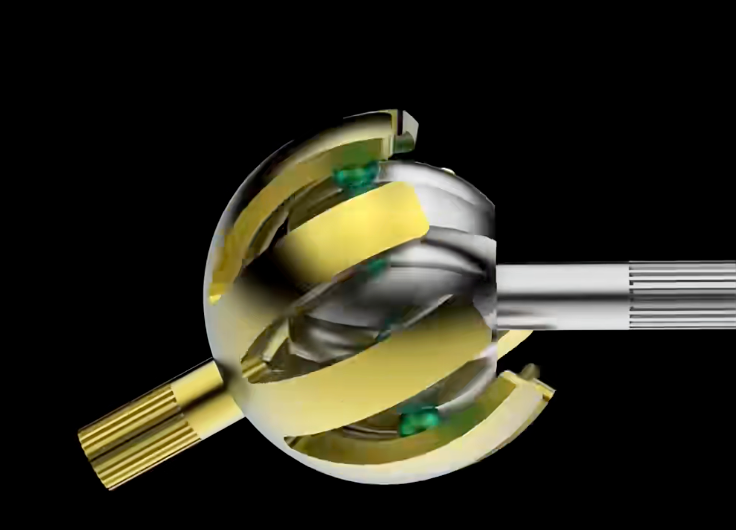
- Fixed CV Joint:Both the outer housing and inner race have six matching grooves, with steel balls sitting inside. No matter how the angle changes, those balls stay on the angle bisector, which keeps input and output speeds exactly the same.
- Plunging CV Joint:Same idea, but with an added bonus: it can slide axially. That means it can handle changes in shaft length, like when a vehicle’s suspension moves up and down.
5. Tripod (Three-Pin) Universal Joint
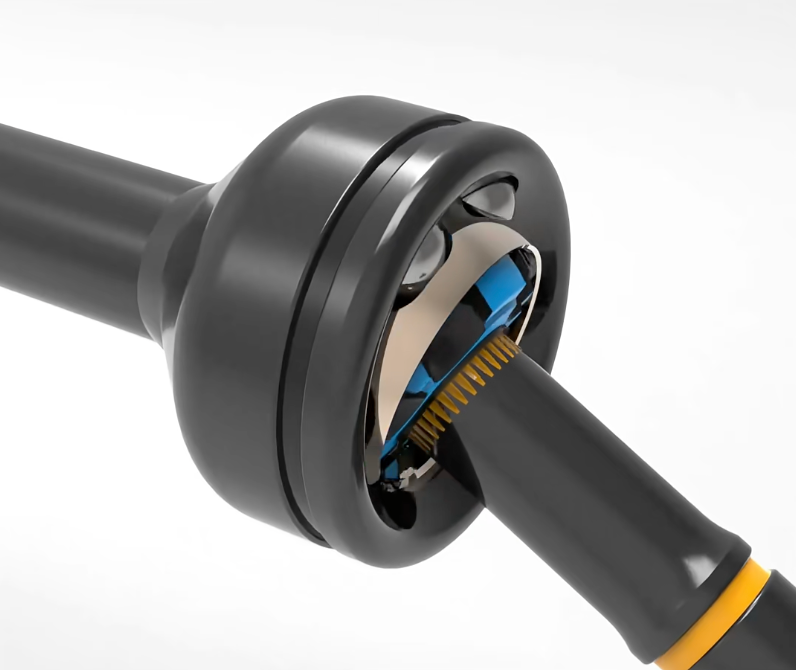
This design uses two eccentric yokes, three pins, and needle bearings. It allows for relatively large working angles, which makes it a good fit for medium and heavy-duty off-road vehicles.
The three pins rotate and move within the structure, handling both torque transmission and angle changes at the same time.
6. Flexible Universal Joint
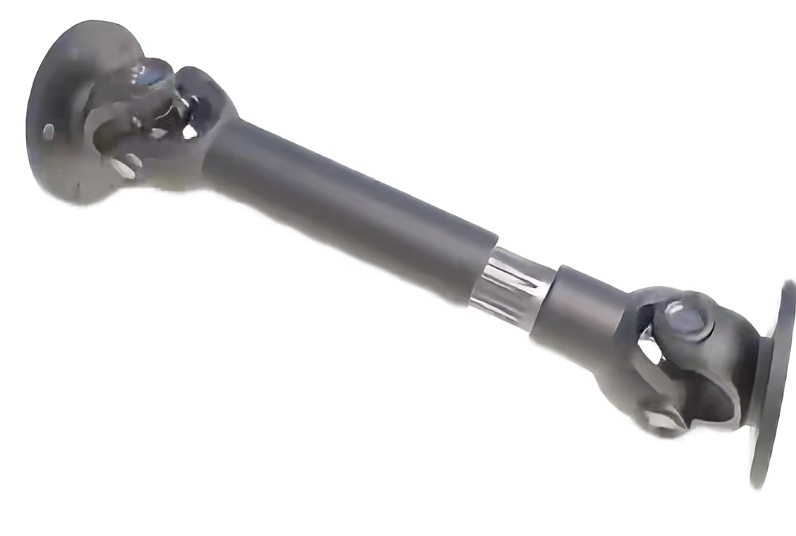
This one swaps metal complexity for rubber flexibility. It’s mainly made of rubber elements, bushings, and bolts.
Instead of rigid movement, it relies on elastic deformation to absorb misalignment and small movements between shafts.
You’ll often see it in setups where space is tight and the angle is small, like between an engine and a transmission.
7. Three-Ball Pin Universal Joint (Advanced Type)
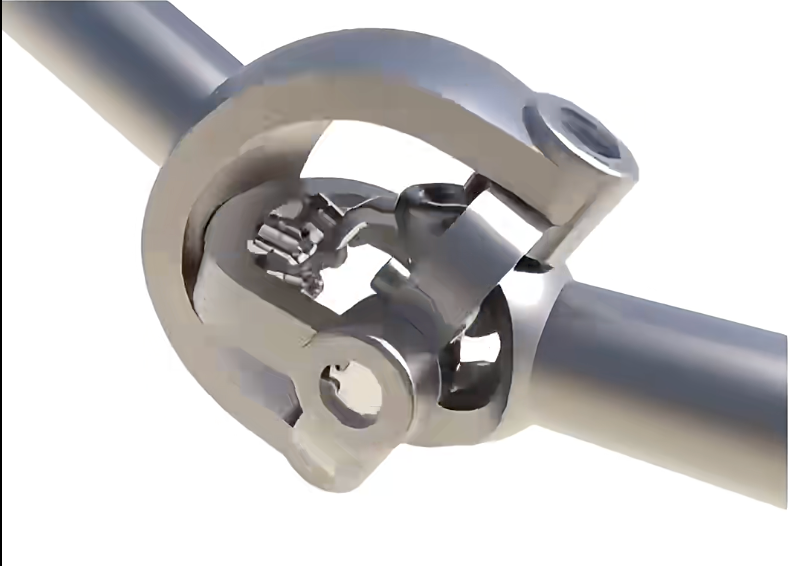
This is a newer design that blends features from ball-and-fork and CV joints.
It’s compact, handles larger angles, and still maintains good constant velocity performance. That makes it a solid choice for high-performance vehicles and specialized applications where both flexibility and smooth power delivery matter.
Looking for the right universal joint or drive shaft solution? Get in touch today and we’ll match you with the best option.