


Structural Adaptability to Vehicle Layout
Special-purpose vehicles rarely follow standard layouts. From modified chassis to uneven load distribution, each application requires a custom drive shaft solution rather than an off-the-shelf product.
Take fire trucks with aerial platforms as an example. As the platform extends, suspension height changes dynamically. This requires adjustable-length drive shafts to prevent stress buildup. In most cases, engineers ensure the working angle stays below 4° under full load to minimize wear on universal joints and extend service life.
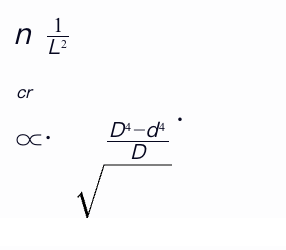
In refuse collection vehicles with rear-mounted compactors, the challenge is even greater. These systems must handle torque exceeding 5,000 N·m while maintaining rotational speeds above 4,500 rpm. Achieving this balance requires precise calculation of shaft diameter and wall thickness based on beam theory, ensuring both strength and critical speed stability.This requires precise calculation of shaft diameter and wall thickness using formulas derived from beam theory, where the outer diameter (D) and inner diameter (d) relationship follows
For articulated agricultural machinery, maintaining smooth power transmission is critical. Double-cardan joint configurations are commonly used to ensure constant velocity during frame movement. Compared to single universal joint systems, this design can reduce vibration by up to 60% when operating on uneven terrain.

Material Selection for Long-Term Durability
Material selection plays a key role in the performance of any heavy-duty drive shaft, especially in extreme environments.
For emergency vehicles operating in cold climates, 40CrNiMo alloy steel is widely used. Even at -40°C, it retains approximately 85% of its tensile strength, providing excellent resistance to brittle fracture during sudden acceleration.
Concrete mixer trucks, on the other hand, operate in highly corrosive environments due to constant exposure to cement slurry. In these applications, 316L stainless steel combined with nitriding treatment is often used. This improves surface hardness to around 450 HV and delivers up to 10 times better corrosion resistance than standard carbon steel.
In high-speed emergency response vehicles, lightweight solutions are becoming more important. Carbon fiber composite drive shafts can reduce weight by up to 40% while maintaining comparable torsional stiffness. Aluminum end fittings handle most of the torque, while the carbon fiber structure helps reduce vibration and noise, typically lowering sound levels by around 8 dB(A) at 3,000 rpm.
Dynamic Load Management in Real Applications
Special-purpose vehicles often operate under fluctuating and unpredictable loads, making drive shaft protection and adaptability essential.
Logging trucks, for example, frequently experience torque spikes when transporting heavy timber. To prevent damage, torque-limiting couplings are used. These systems disengage automatically at around 120% of rated torque and reset once conditions return to normal.
Military vehicles operating in desert environments require additional durability. Self-lubricating bushings made from PEEK composite materials are commonly used. Compared to traditional bronze bushings, they reduce friction by up to 75% and extend maintenance intervals from 5,000 km to 20,000 km.
Airport baggage tractors face a different challenge—constant start-stop cycles. To reduce resonance and noise, drive shafts are equipped with vibration isolators tuned to approximately 18 Hz. This design can reduce cabin noise by up to 12 dB, improving operator comfort during long working hours.
Precision Manufacturing Requirements
When it comes to custom drive shaft manufacturing, precision is not optional—it directly impacts performance and lifespan.
For aerial work platforms, spline positioning accuracy must be controlled within ±0.02 mm to prevent binding during operation. This requires high-precision CNC broaching equipment with sub-micron control capability.
In mining dump trucks, flange alignment is critical. The perpendicularity tolerance between the flange and shaft axis must remain within 0.05° to prevent oil leakage and ensure reliable operation. Laser welding is typically used to minimize the heat-affected zone and preserve material strength.
For medical transport vehicles carrying sensitive equipment, vibration control is crucial. Drive shafts must meet ISO G0.4 balancing standards. This level of precision requires advanced dual-plane balancing machines capable of detecting minimal imbalance at high rotational speeds.
Frequently Asked Questions About Custom Drive Shafts
1. What is a custom drive shaft used for?
A custom drive shaft is designed for vehicles or equipment with non-standard layouts, such as special-purpose vehicles, agricultural machinery, or heavy-duty industrial systems. It ensures proper torque transmission, alignment, and durability under specific working conditions.
2. When should I choose a custom drive shaft instead of a standard one?
You should consider a custom drive shaft when your application involves high torque, unusual installation angles, extreme environments, or modified chassis structures. Standard drive shafts may fail prematurely in these conditions.
3. What materials are best for heavy-duty drive shafts?
Material selection depends on the application:
- 40CrNiMo alloy steel for low-temperature environments
- 316L stainless steel for corrosion resistance
- Carbon fiber composites for lightweight and high-speed performance
4. How do I select the right drive shaft size and diameter?
The correct size depends on torque, rotational speed, and shaft length. Engineers typically calculate diameter and wall thickness using mechanical formulas to ensure sufficient strength and avoid critical speed issues.
5. What is the maximum operating angle for a universal joint drive shaft?
In most applications, the recommended operating angle is below 4°. Exceeding this limit can lead to increased wear, vibration, and reduced service life.
6. Can OEM manufacturers customize drive shafts based on drawings?
Yes. Most professional drive shaft manufacturers offer OEM and ODM services, including customization based on technical drawings, samples, or specific performance requirements.
7. How important is dynamic balancing for drive shafts?
Dynamic balancing is critical, especially for high-speed applications. Poor balancing can cause vibration, noise, and premature failure. High-precision drive shafts often meet ISO G6.3 or even G0.4 standards.
8. What industries commonly use custom drive shafts?
Custom drive shafts are widely used in:
- Special-purpose vehicles (fire trucks, refuse trucks)
- Agricultural machinery
- Construction and mining equipment
- Military and defense vehicles
- Airport ground support equipment
Conclusion
Custom drive shafts are not just about fitting into a vehicle—they are about ensuring reliable performance under real working conditions.
For OEMs and industrial buyers, choosing the right drive shaft manufacturer with strong engineering capabilities can significantly reduce downtime, maintenance costs, and long-term risks.